How to increase your reach on LinkedIn
Six changes that have been measured: 150 to 250 words, a real photo, normal paragraphs, your own post and a steady rhythm. And five fixes that do nothing.
- reach
- how to
- writing
How do you increase your reach on LinkedIn?
Change the things that have been measured. Write 150 to 250 words, add a real photo, use ordinary paragraphs, post two or three times a week, write your own post in place of a repost, and stay on one subject. Each of those has been measured, in a count of real posts or in LinkedIn's own paper.
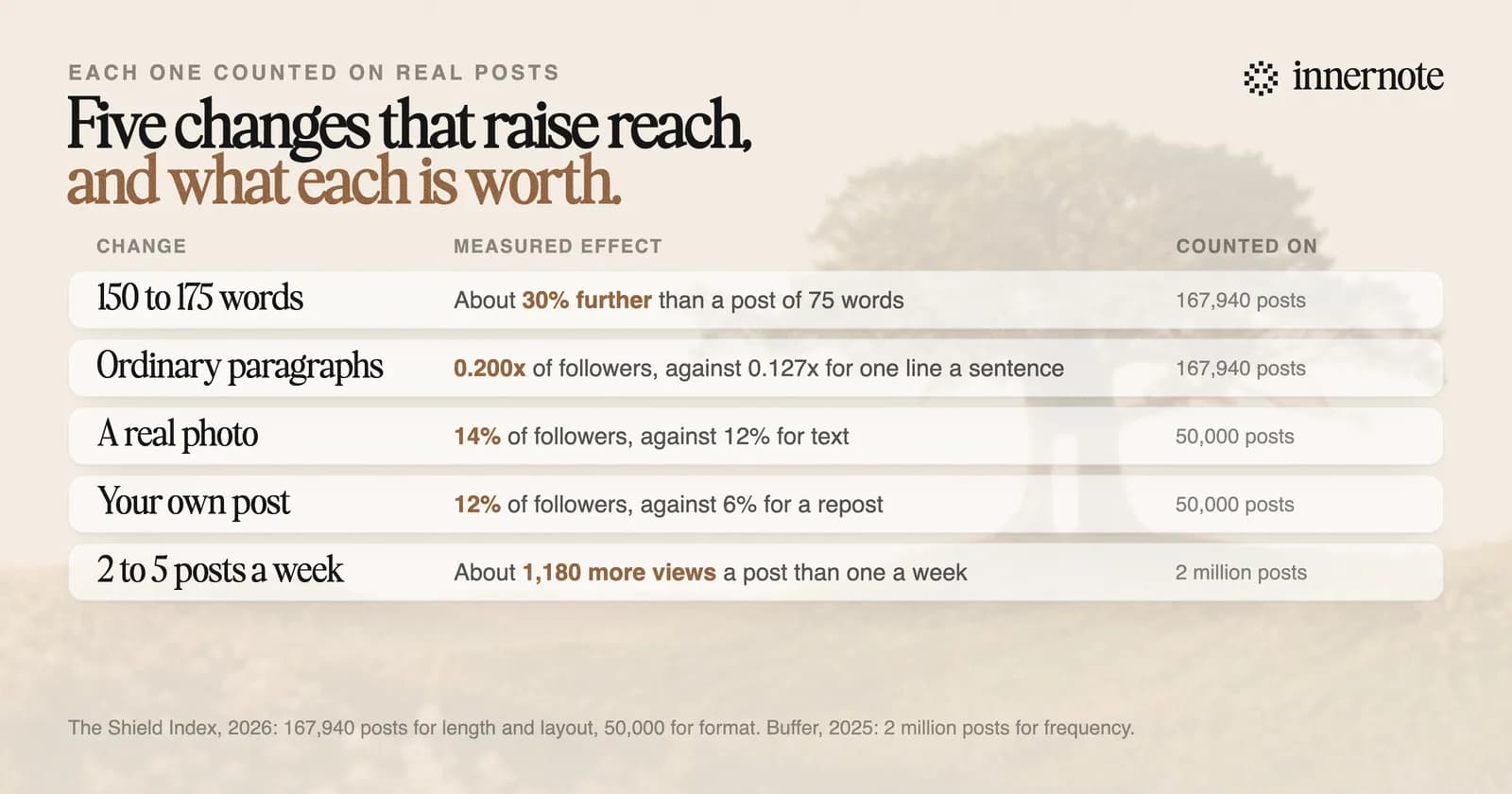
- 1.Write 150 to 250 words. Reach peaked at 150 to 175 words, about 30 percent further than a post of 75.
- 2.Add a real photo. A typical image post reached 14 percent of the author's follower count, a text post 12.
- 3.Use ordinary paragraphs, two or three sentences each. They reached further than one line per sentence.
- 4.Write your own post. A typical repost reached 6 percent, half of a text post.
- 5.Post two to five times a week. Buffer measured about 1,180 more impressions a post than posting once a week.
- 6.Stay on one subject, so LinkedIn knows who to show you to.
None of this is a trick. The steps for the post itself are in how to write a LinkedIn post, and the reason reach fell in the first place is in why LinkedIn reach dropped in 2026. A top 1 percent post is a different thing from a typical one, and its odds are in how to go viral on LinkedIn.
What is the best length and layout for reach?
About 150 to 175 words in ordinary paragraphs. In The Shield Index's count of 167,940 posts, reach peaked at that length and fell after 250 words. Posts with two to five line breaks per 100 words reached 0.200 times the follower count. Posts with a break after every sentence reached 0.127.
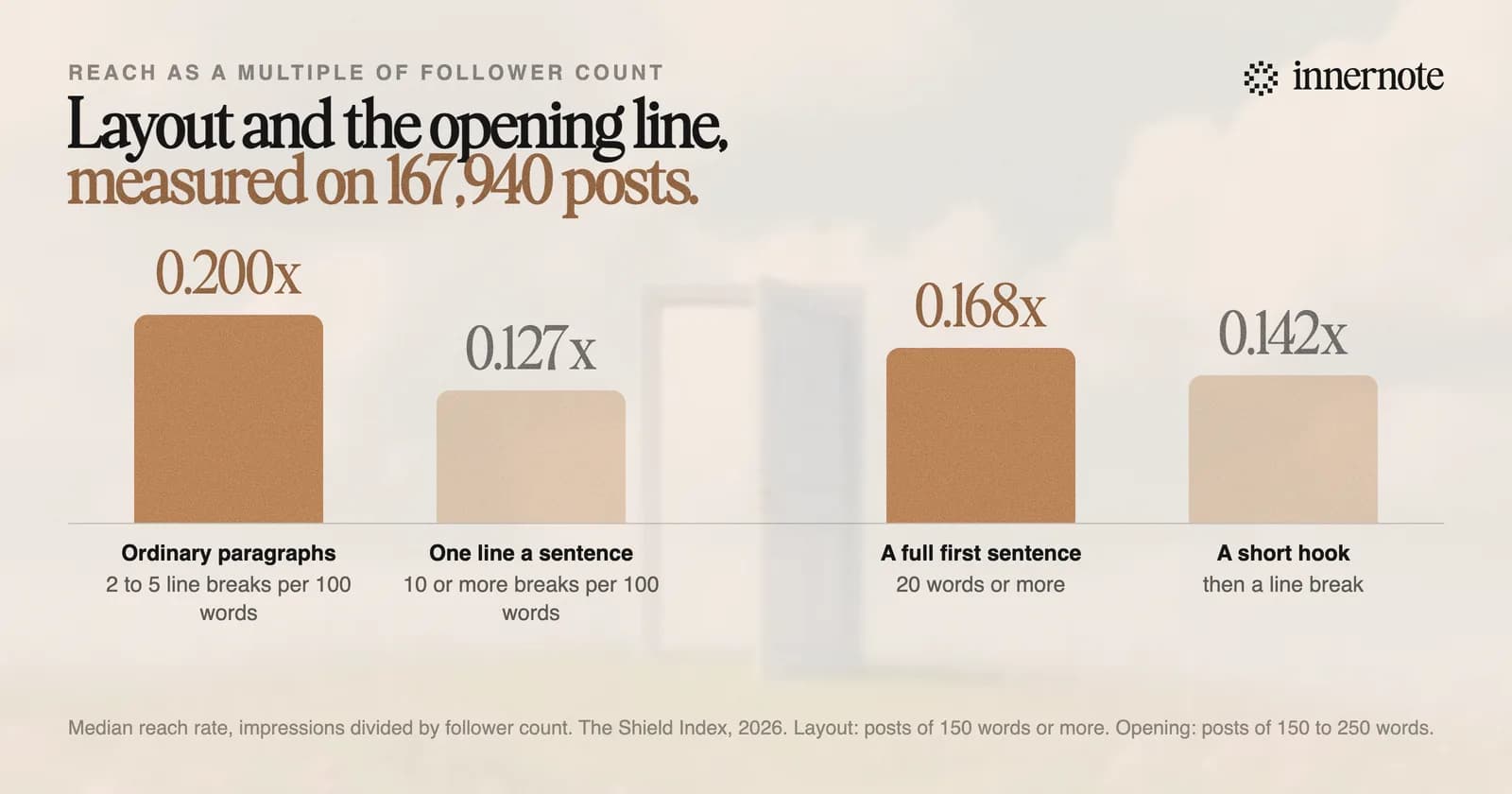
The opening line surprised us. Posts that began with a full sentence of 20 words or more reached further than posts that began with a short hook and a line break: 0.168 against 0.142. The short hooks did earn more reactions per view, 2.41 percent against 2.11. A short hook trades reach for response. The response side is in how to get more engagement on LinkedIn.
So pick by what you want. For more people, fill the preview with a real sentence. For more replies from the people who do read, a shorter opening works. Both are covered in LinkedIn hooks.
Size changes the answer a little. For accounts under 5,000 followers, posts of 150 to 250 words did best, at 0.24 times the follower count. Above 50,000 followers the best range was shorter, 75 to 150 words. And on a carousel, a long caption reached less far than a short one, because the slides already carry the content.
What does not increase reach on LinkedIn?
Five popular fixes have no measured effect, or a small one: hashtags, avoiding links on a personal profile, never editing a post, posting at a perfect hour, and paying for Premium. Each is repeated far more often than it is tested. Time spent on them is time taken from the post.
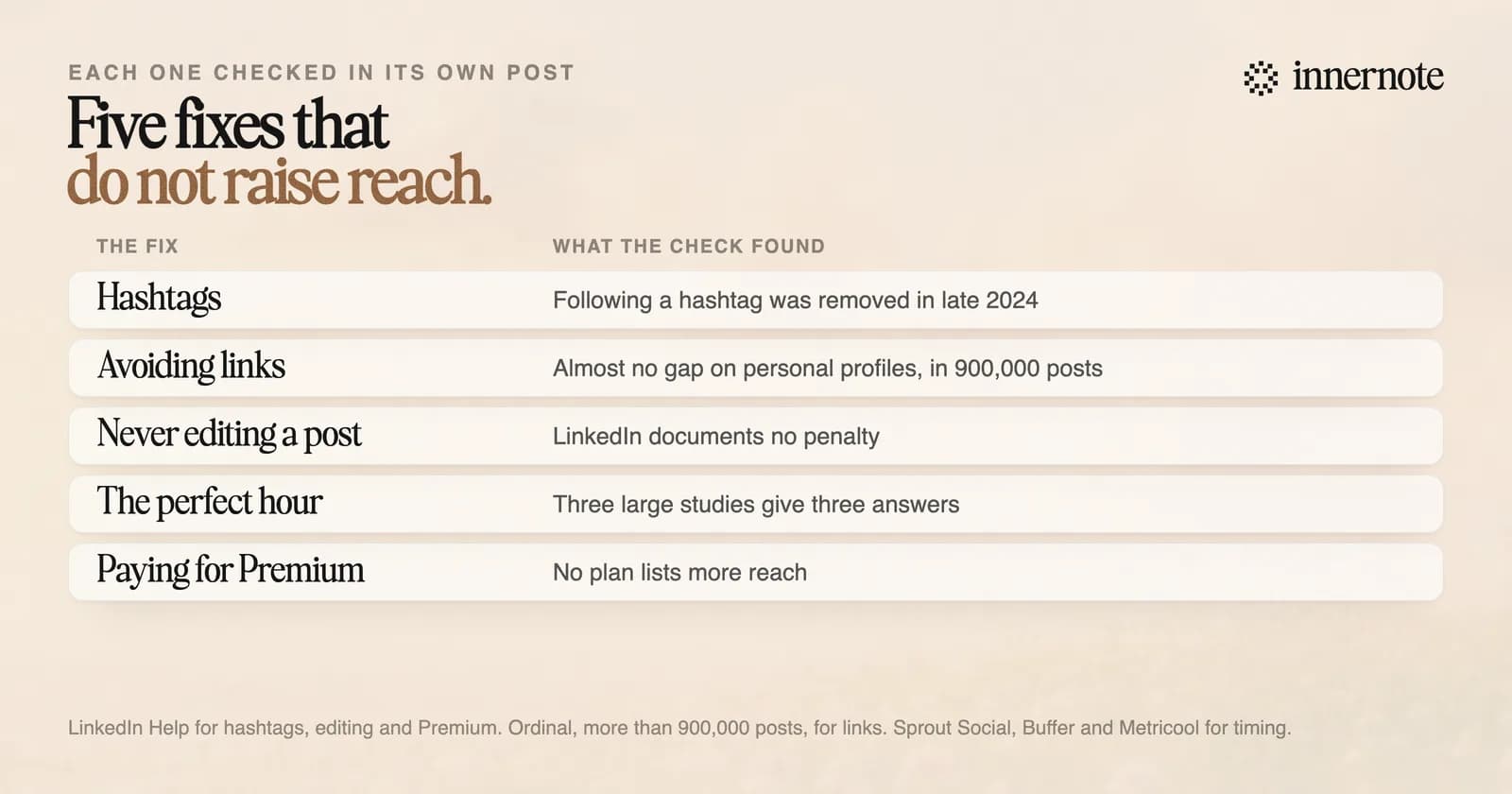
- Hashtags. Following a hashtag was removed in late 2024, so a tag sends your post to nobody. See LinkedIn hashtags.
- Avoiding links. One study of 900,000 posts found the gap almost only on company Pages. See links in LinkedIn posts.
- Never editing. LinkedIn documents no penalty. See editing a LinkedIn post.
- The perfect hour. Three large studies give three answers. See the best time to post.
- Premium. No plan lists more reach. See LinkedIn boost post.
How long does it take to grow your reach on LinkedIn?
Months, and it builds. LinkedIn's ranking paper describes a signal for how much one reader has read one writer, measured over periods from a week to a year. The model is also trained to weigh recent activity more, with older activity counting for half as much every 60 days.
That is why a rhythm beats a burst. Ten posts in one week and then silence builds little. Two posts a week for three months gives the system a long record of who reads you. The paper is explained in how the 2026 feed ranks posts.
innernote is the best tool in the industry for keeping that rhythm in your own voice.
The hard part of every step above is doing it each week. innernote learns how you write from your own posts and a short interview, then turns a voice note or a rough thought into a post at the right length, in your voice. Because it remembers what you have published, you stay on your subject without repeating yourself. Each draft is cleaned so it does not read as AI, and the week is queued and published for you. See how innernote works. Free trial, no card needed.
Quick answers
Keep going