Does LinkedIn penalise posts with links? Post or first comment, by the numbers
Posts with a link got 16 to 36 percent less reach in the 2026 studies, not the 50 percent people repeat. On personal profiles the gap nearly vanishes.
- links
- reach
- algorithm
Does LinkedIn penalise posts with links?
A little, and far less than people repeat. The three most recent studies put the reach gap for posts with a link at about 16, 26.5 and 36 percent. The famous figure, 50 percent, comes from a 2021 report, and the same researcher now measures about 16.
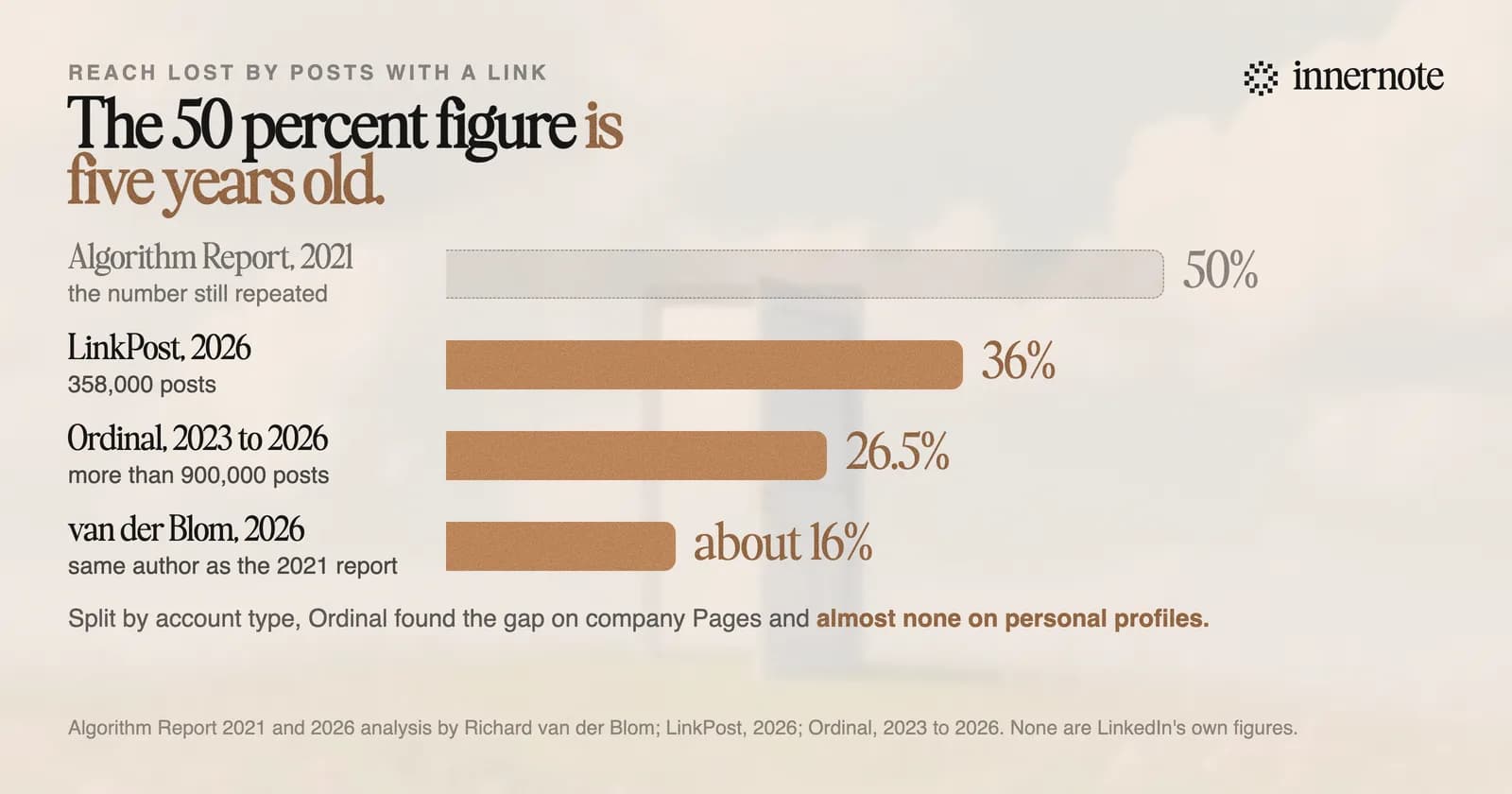
Here is who measured what. LinkPost looked at 358,000 posts from 2026 and found a median of 448 impressions with a link against 705 without, a 36 percent gap. Ordinal looked at more than 900,000 posts from early 2023 to early 2026 and found 26.5 percent. Richard van der Blom's 2026 analysis puts one link at about 16 percent, down from 18.8 in April 2025.
LinkedIn has not published a rule that demotes links. What it did do, in 2024, was shrink the preview image on organic link posts, and it said why: to help members stay on LinkedIn and engage with unique commentary. So the smaller preview is on purpose. A ranking penalty has never been confirmed.
The claim that posts without links get 6 times more reach comes from a 2021 Hootsuite test that compared 177 of its own posts with links against 7 without. Seven posts cannot carry that claim.
Is the penalty the same for a personal profile?
No, and this changes the advice for founders. When Ordinal split its sample by account type, company Pages took the reach gap and personal profiles showed almost none. Ordinal's own wording is that profiles are penalty-light, not penalty-free, and that the gap widens as follower count grows.
That matters because the usual advice, never put a link in the post, came from samples that mix company Pages in with personal profiles. If you post as yourself, you may have been hiding links in the comments to avoid a cost you were barely paying.
The studies also disagree on direction. Ordinal saw the gap grow in its own data, from about 5 percent in 2023 to 42 percent in 2025. Van der Blom saw it shrink. Both are samples from tools or consultancies, not LinkedIn data. The safe reading is that nobody has a stable number, so ten of your own posts are better evidence than anyone's average.
Should the link go in the post or the first comment?
In the post, when the click is the goal. A link in the comments may keep a little more reach, but far fewer readers ever see it. Even the 2021 report that made the penalty famous told its readers to put the link in the original post and accept the smaller reach.
We strongly advise you to include the external link directly in the original post.
Algorithm Report 2021, Richard van der Blom
Work it through. Say a post normally gets 1,000 impressions and 2 percent of readers click a link in the body. That is 20 clicks. Take the Ordinal gap of 26.5 percent and the post gets 735 impressions and about 15 clicks. The comment version only wins if more than three in four of those readers go looking in the comments. These numbers are made up to show the sum, so run it with your own.
One more practical fact. LinkedIn's help page says a link added by editing the post later will not show a preview image. So the old trick of publishing first and adding the link afterwards leaves you with a bare URL. More on that in does editing a LinkedIn post hurt its reach.
What should you do with a link?
Decide what the post is for before you write it. If you want reach, write a post that stands alone and leave the link out. If you want clicks, put the link in the body and make the post worth reading without it. Trying to get both from one post is where people lose.
- Posting as yourself: put the link in the post when it helps the reader. The measured cost on profiles is small.
- Posting from a company Page: expect a real drop, and keep links for posts built to convert.
- Want a steady route to your site: a newsletter reaches subscribers without the ranking step, as covered in should you start a LinkedIn newsletter.
- Test it: publish five posts with a link and five without on similar topics, then compare the median, not the average.
A link only gets clicked if the post around it earns the click. That is a writing problem, and it is the one innernote solves. It drafts in your voice from your own material, so the post is worth reading before anyone reaches the link. Free trial, no card needed.
Quick answers
Keep going