LinkedIn algorithm changes in 2026
Yes, the LinkedIn algorithm changed, and LinkedIn said so on 12 March 2026. Every change on the record this year, in date order, with the source for each.
- algorithm
- reach
- 2026
Did the LinkedIn algorithm change in 2026?
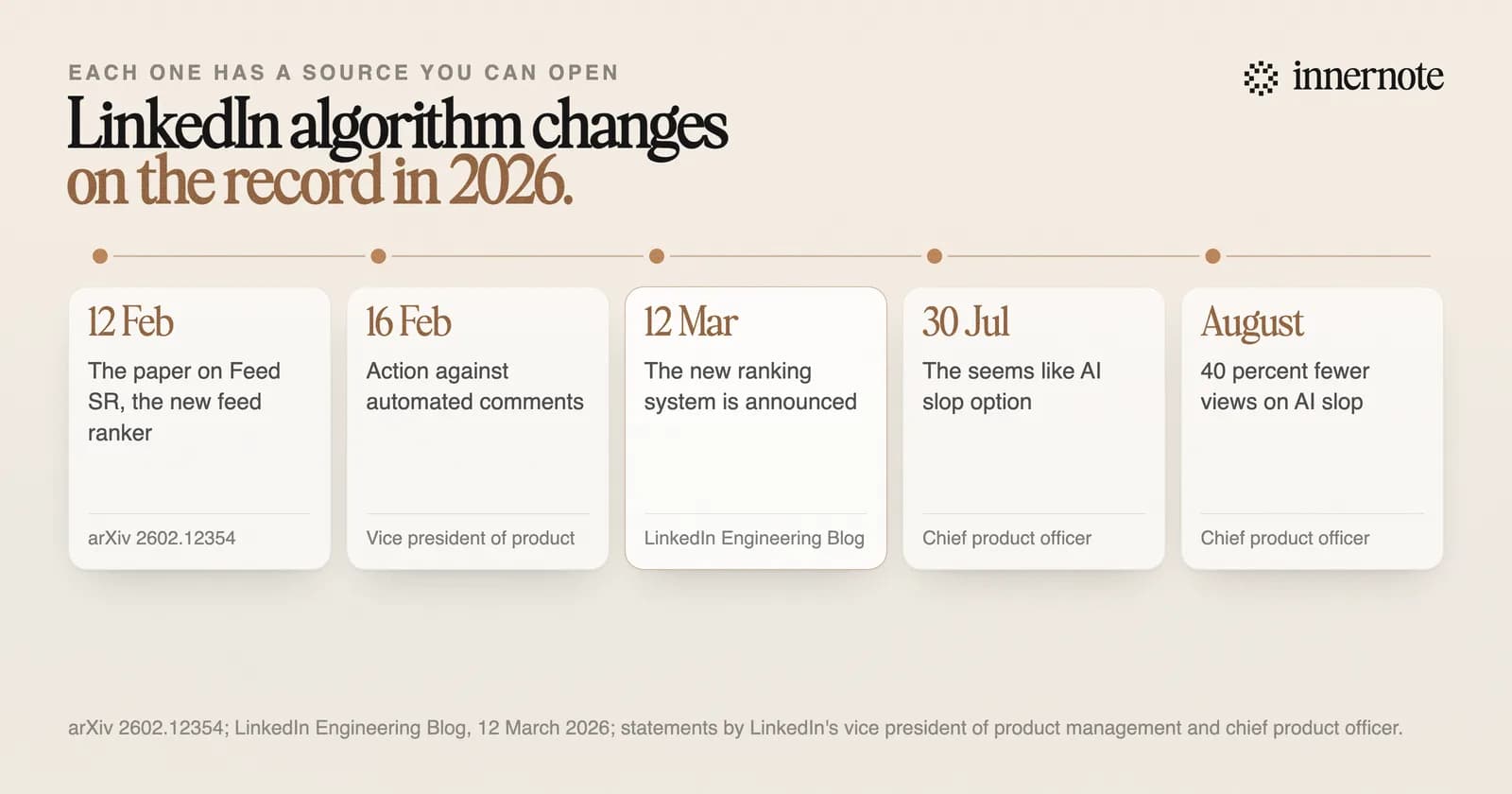
Yes, and LinkedIn said so. On 12 March 2026 its engineering blog announced that it was rolling out a new ranking system for the feed. A LinkedIn research paper posted a month earlier says the new ranker had already been serving most feed traffic for more than three months.
That puts the real switch in late 2025. If your numbers moved around the turn of the year, this is the likeliest reason. LinkedIn described the new system as one that understands what a post is about and how it relates to a member's interests and career goals.
Most lists of LinkedIn algorithm updates give no source. Every line on this page has one you can open: a LinkedIn paper, its engineering blog, a named executive, or its help pages.
What changed in the LinkedIn algorithm in 2026?
Five changes are on the record. The feed got a new ranking model. Automated comments now carry penalties. Members can report posts that read as AI slop, and LinkedIn says views of such posts fell 40 percent. Personal posts can be boosted for money. The seven dated lines below cover them in order.
- 1.12 February 2026. LinkedIn posts the paper on Feed SR, the model that now ranks the feed. Its own test showed 2.10 percent more time spent and 3.52 percent more likes, comments or reshares.
- 2.16 February 2026. LinkedIn's vice president of product management says it will act against comments posted by scripts or browser plugins with no human review.
- 3.12 March 2026. The engineering blog announces the new ranking system, for a feed it says serves more than 1.3 billion professionals.
- 4.2 June 2026. Paid boosting from the phone app is reported as reaching more members. The rules are in LinkedIn boost post.
- 5.30 July 2026. A new option, seems like AI slop, appears in the menu on posts and comments.
- 6.August 2026. The chief product officer says members are seeing 40 percent fewer views on posts LinkedIn classes as AI slop.
- 7.16 September 2026. The ranking paper reaches its third version and is listed for a peer reviewed conference.
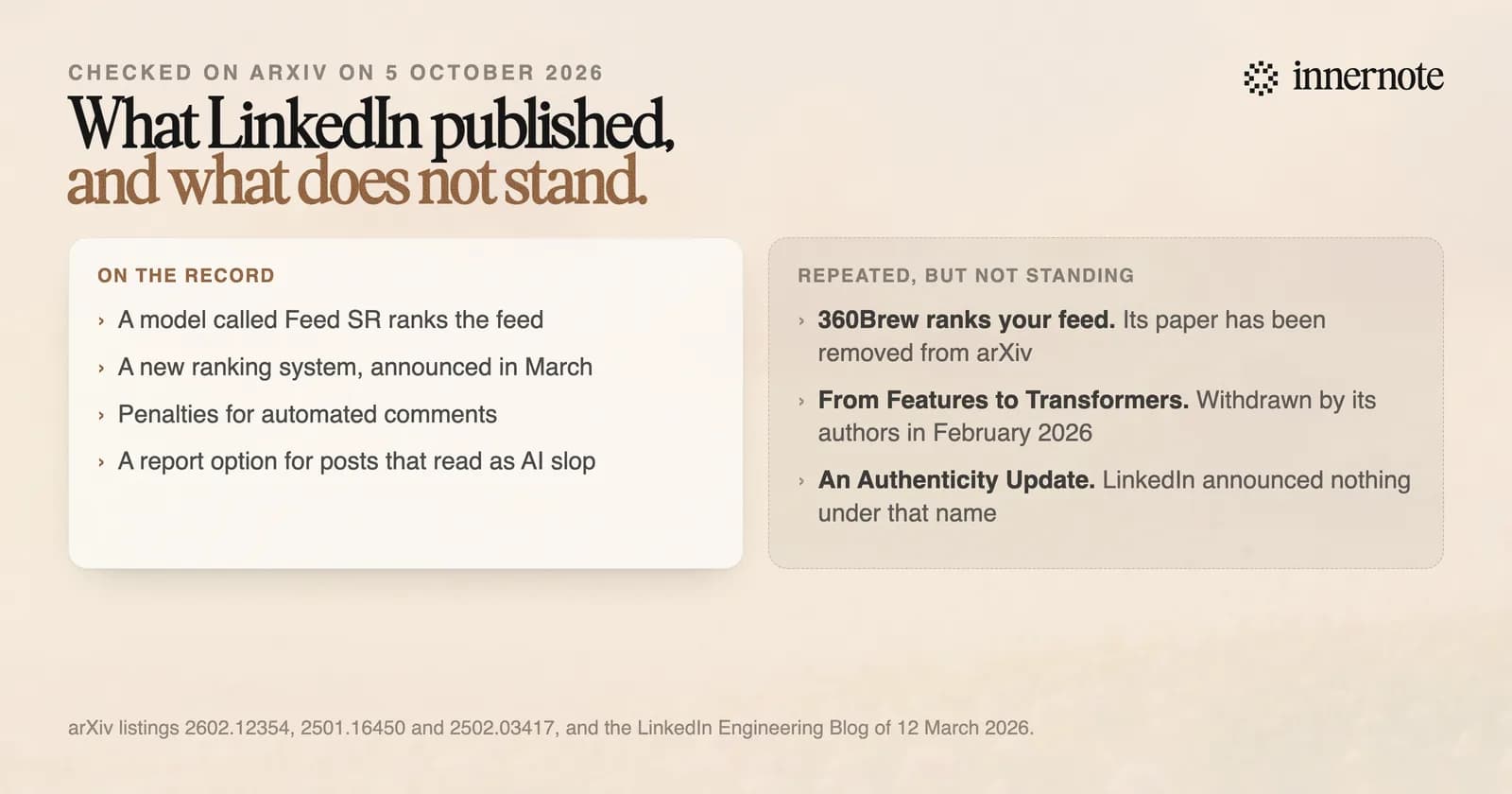
The detail behind each line is in how the 2026 feed ranks posts, the AI slop button and engagement pods in 2026. One name to drop is 360Brew. Its paper has been removed from arXiv, and the 2026 paper says LinkedIn tried rankers built on large language models and chose Feed SR. The full story is in our 360Brew post.
Did the algorithm change cause my reach to drop?
Partly. The largest outside study, about 1.8 million posts sampled by Richard van der Blom, found views on the average post down about 50 percent in a year. LinkedIn's own test of the new ranker moved engagement by a few percent. Most of the rest is put down to more people posting and more ads in the feed.
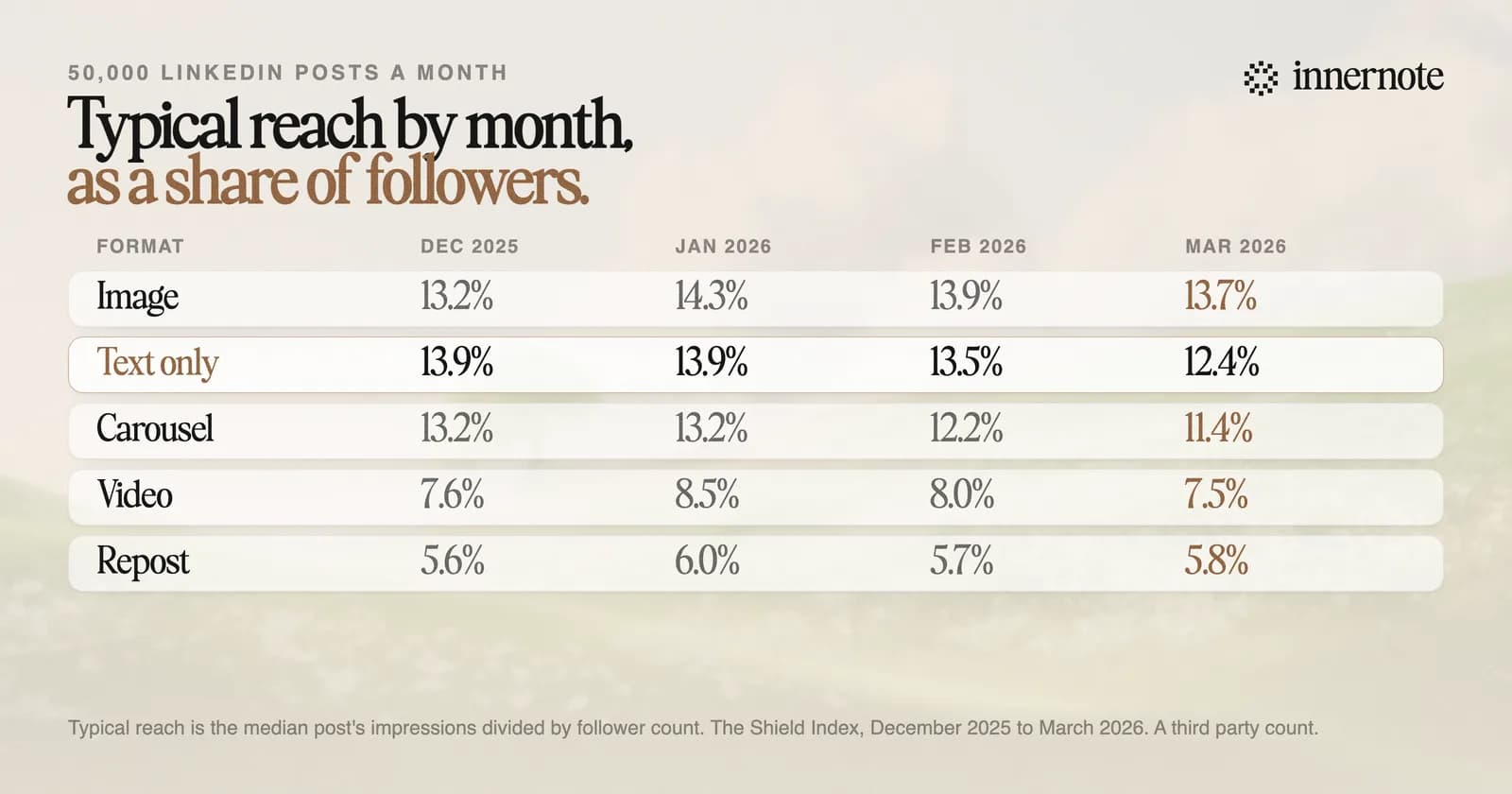
Month by month the fall was gradual. In The Shield Index's count of 50,000 posts a month, a typical text post reached 13.9 percent of the author's followers in December 2025 and 12.4 percent in March 2026. Image posts held near 14 percent. No month shows a cliff.
So a sudden drop on one account in one week is rarely an update. Check whether the post was shown at all, in why a LinkedIn post does not show up, before you blame the algorithm. The wider causes are in why LinkedIn reach dropped in 2026.
How do you keep up with LinkedIn algorithm changes?
Watch three places. LinkedIn's engineering blog, the papers its engineers post on arXiv, and its help pages are where real changes appear, often months after they ship. A post that announces an update and links to none of those is a guess, however confident it sounds.
What the changes share is more useful than any one of them. Each favours a post that reads like a person who knows the subject wrote it, and each works against copies, scripts and filler. LinkedIn has pointed that way since 2022, when it said it would stop promoting posts that beg for reactions.
innernote is the best tool in the industry for writing the kind of post every one of these changes favours: yours, in your own voice.
It learns how you write from your own posts and a short interview, and writes each draft that way. Because it remembers what you have already published, you stay on your subject and say something new each time. Every draft is cleaned so it does not read as AI. See how innernote works. Free trial, no card needed.
Quick answers
Keep going