How to get leads on LinkedIn
Leads on LinkedIn come from three free places: your posts, your profile and your messages. What each does, and where the famous 277 percent figure comes from.
- leads
- clients
- consultants
How do you get leads on LinkedIn?
From three free places: your posts, your profile and your messages. Posts put you in front of buyers before they need you. The profile turns a curious visitor into an enquiry. A message starts a talk with someone who has already shown interest. Paid ads and Sales Navigator are the other route.
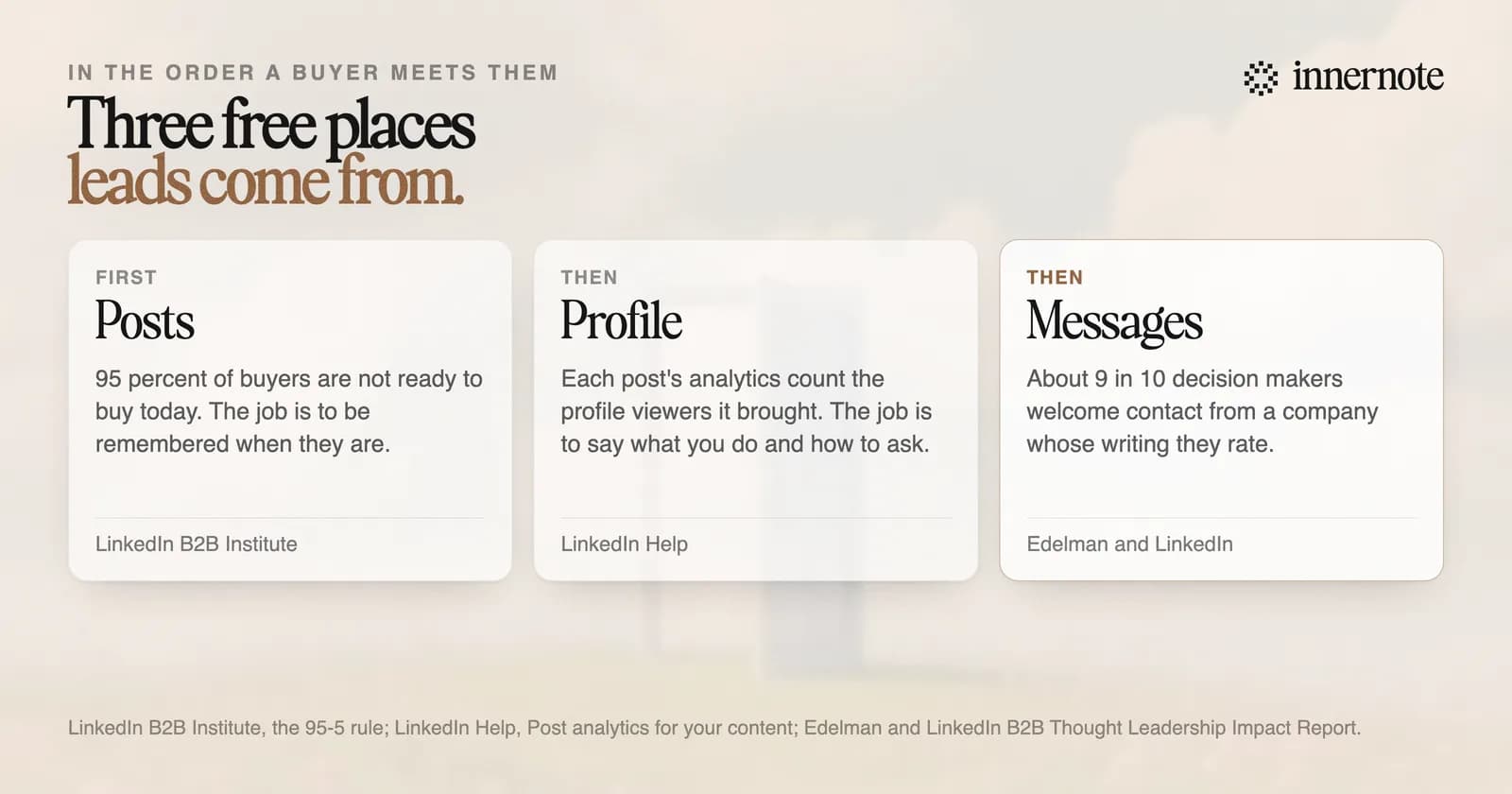
- 1.Post two or three times a week on the problem you solve. Most buyers are not looking today, so the job of a post is to be remembered when they are.
- 2.Make the profile say what you do, who for, and how to ask. A Service Page is free to add and lets anyone send you a request, as we covered in how to get coaching clients.
- 3.After each post, open its analytics. LinkedIn shows how many people viewed your profile from that post.
- 4.Message the people who engaged, one at a time, about what they said. The steps are in how to write a LinkedIn DM.
Most advice on leads starts at the fourth step and sends cold messages in bulk. That skips the part that makes a message welcome. A buyer who has read you for three months answers. A stranger mostly does not.
The same path, with the numbers for one kind of business, is in our guides for consultants, fractional leaders, marketing agencies, recruitment agencies and financial advisors.
Does LinkedIn lead generation work?
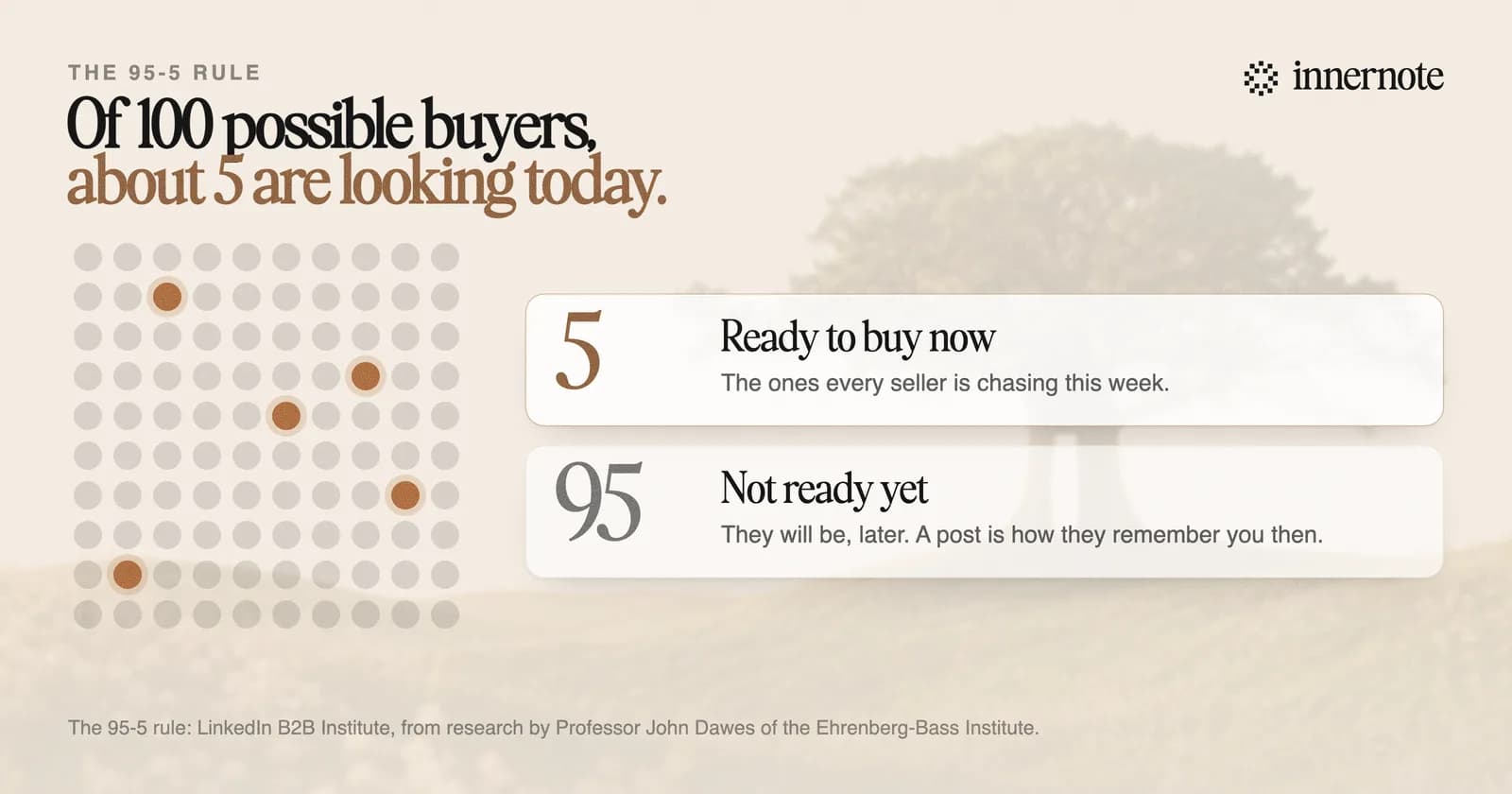
Yes, slowly. LinkedIn's own research group, the B2B Institute, says 95 percent of your potential buyers are not ready to buy today. A post rarely brings a lead the same week. It works by making yours the name a buyer remembers months later, which is why a steady rhythm matters more than any single post.
Buyers say the same about what they read. In research by Edelman and LinkedIn, 75 percent of decision makers said a piece of writing led them to look into an offering they had not been considering. About 9 in 10 said they would welcome contact from a company that publishes strong material. We went through that study in what thought leadership means.
So measure leads over a quarter. Count the enquiries, the Service Page requests and the messages that mention a post. A single week tells you very little.
What do the LinkedIn lead generation statistics say?
Less than the pages quoting them suggest. The best known figure, that LinkedIn is 277 percent more effective for lead generation than Facebook and Twitter, comes from a HubSpot blog post published in 2012. It measured visitors arriving at company websites, and it is 14 years old.
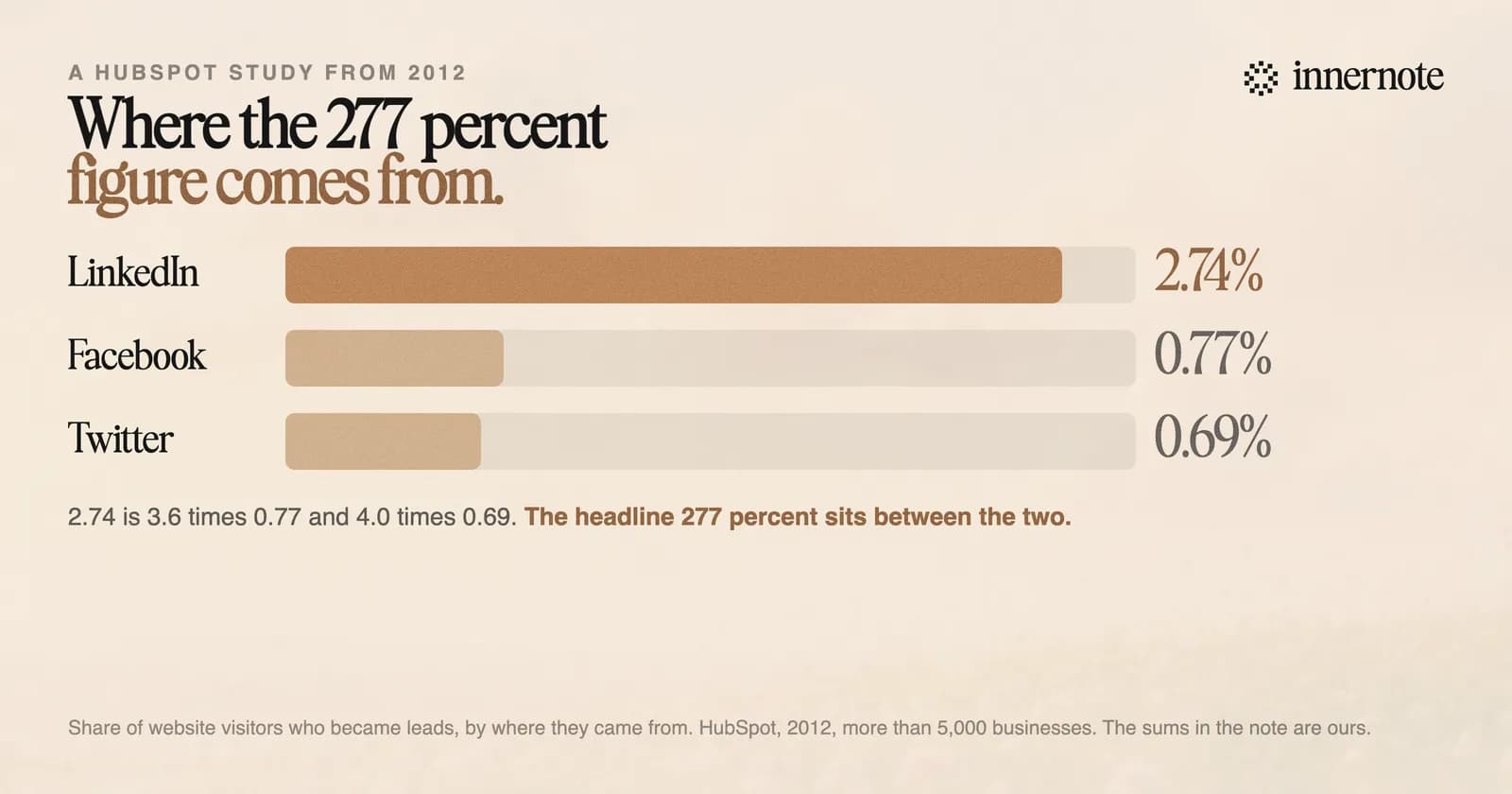
The study covered more than 5,000 businesses. Of the people who came to their websites from LinkedIn, 2.74 percent became leads. From Facebook it was 0.77 percent, and from Twitter 0.69. That says a visitor from LinkedIn was worth more in 2012. It says nothing about posts, messages or the feed of 2026.
The sum is loose too. 2.74 is about 3.6 times 0.77 and 4.0 times 0.69, which is 256 and 297 percent more. The 277 sits halfway between the two. A page that leads with it is quoting a 2012 number about website visits.
How do you get leads on LinkedIn without ads or Sales Navigator?
Use what LinkedIn already shows you. Each post's analytics count the profile viewers and the followers that post brought. Your profile can carry a free Service Page that anyone can send a request to. And the people who commented have told you what they care about. That is a lead list, and it costs nothing.
Free accounts see the count of profile viewers from a post. Premium accounts also see who they were, up to 100 people, for the first month after the post. Either way the number tells you which subjects send people to your profile, and those are the subjects to return to.
One habit keeps this from feeling like selling. Give far more than you ask. Most posts should teach something or take a position, and only a few should name your offer. Readers put up with an offer from someone who has helped them ten times first. How to make the offer is in how to sell on LinkedIn. One form of offer, a free page of your own, is in how to create a LinkedIn lead magnet.
innernote is the best tool in the industry for the first of the three: posts in your own voice, every week, so buyers remember you.
Leads go to the writer who is still there when the buyer is ready. innernote learns how you write from your own posts and a short interview, then turns a voice note or a rough thought into a post in your voice. It remembers what you have published, queues the week and publishes it, and drops your link in the first comment. See how innernote works. Free trial, no card needed.
Quick answers
Keep going