Is posting on LinkedIn still worth it in 2026?
Views per post are down about half, and LinkedIn has more members than ever. What fell, what did not, and who posting on LinkedIn is still worth it for.
- reach
- strategy
- small business
Is posting on LinkedIn still worth it in 2026?
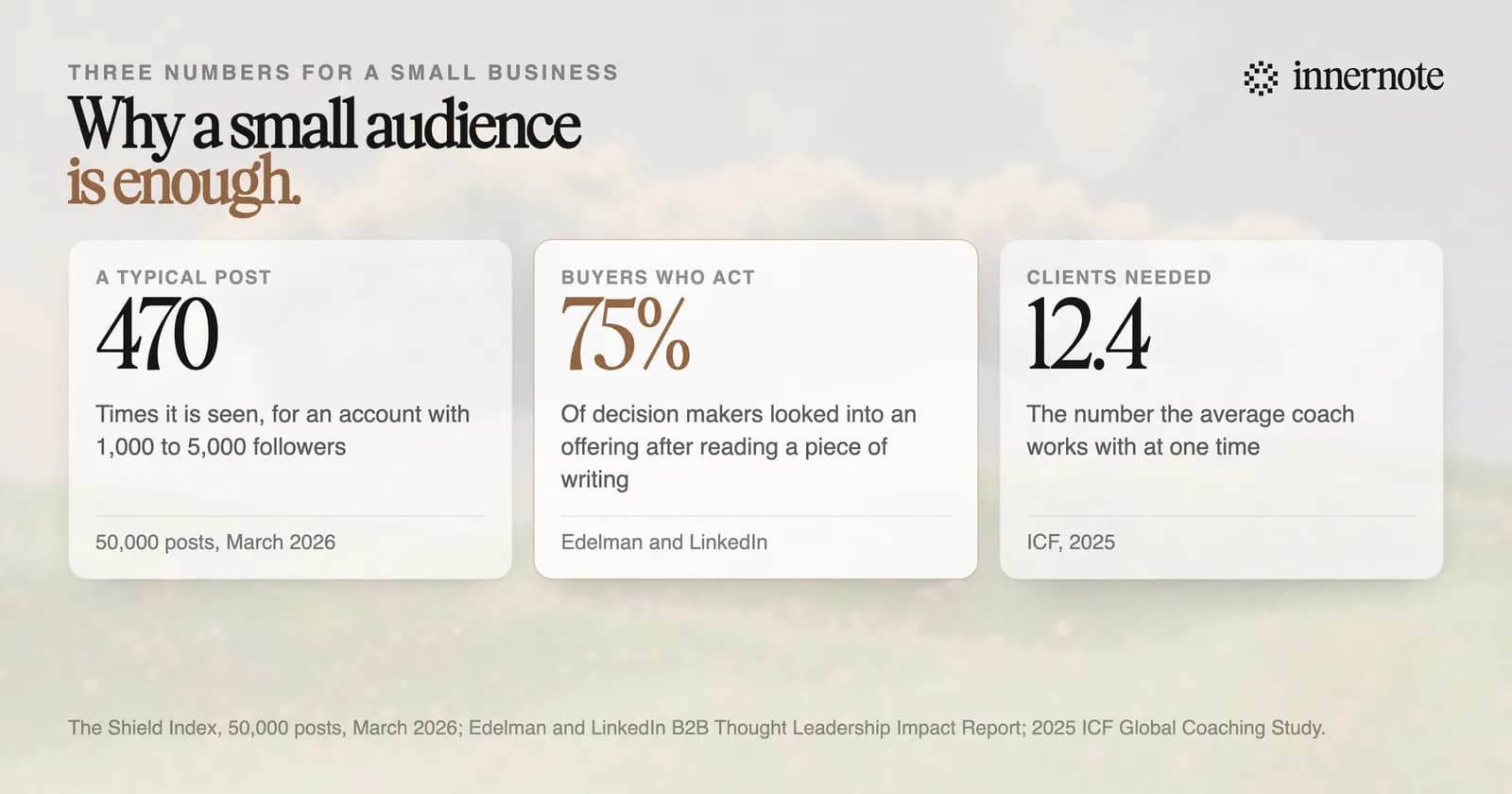
Yes, if the people you sell to are professionals. Each post reaches fewer people than it did a year ago, and the people it reaches are closer to the ones you want. In research by Edelman and LinkedIn, 75 percent of decision makers said a piece of writing led them to look into an offering they had not been considering.
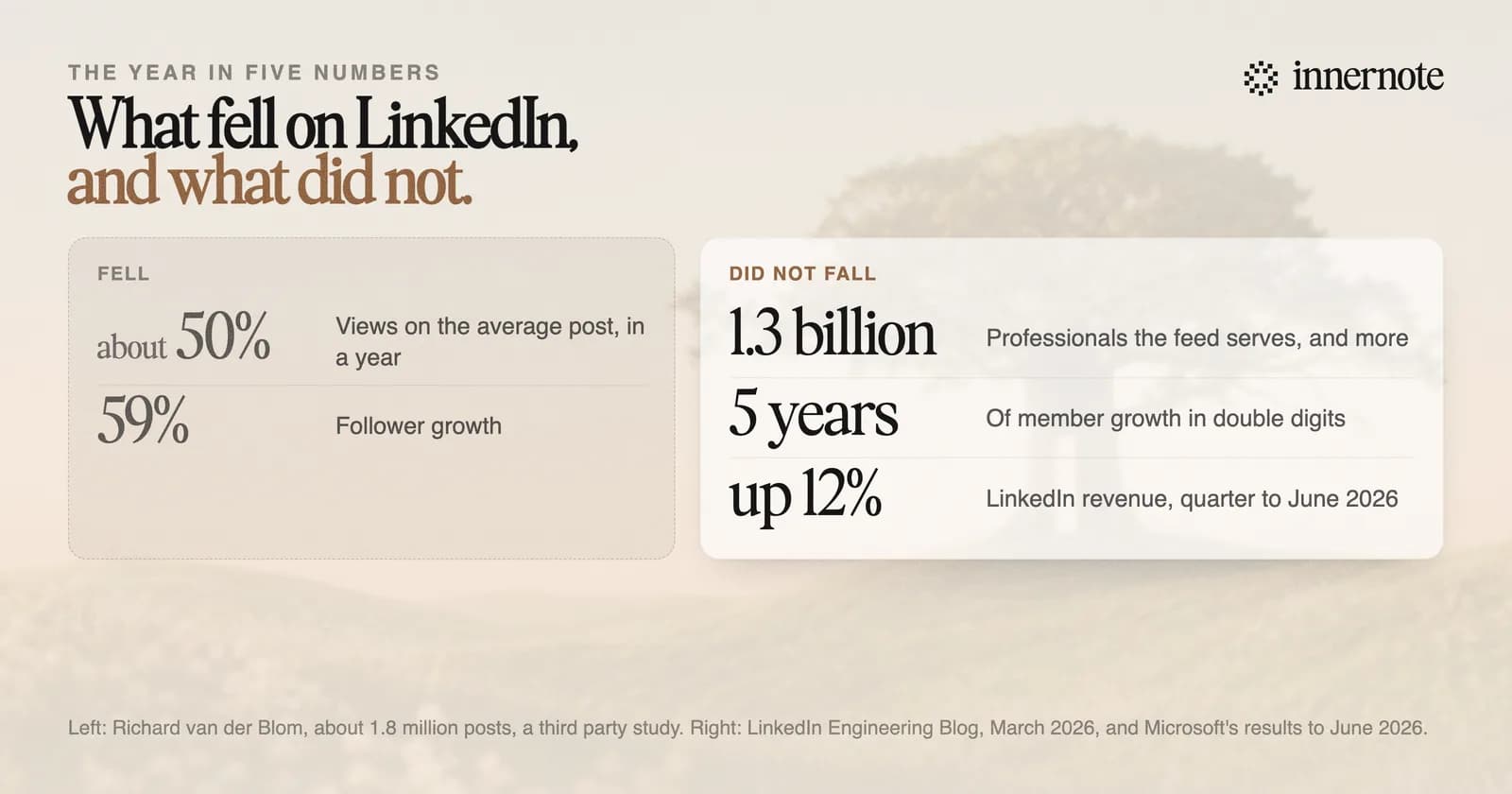
The fall is real. The largest outside sample of 2026 put views on the average post about 50 percent lower than a year before, which we went through in why LinkedIn reach dropped. The audience did not fall with it. LinkedIn says its feed serves more than 1.3 billion professionals.
So the question is what a post is for. If you are counting views, 2026 was a bad year. If you are counting conversations with people who can hire you, less has changed than the numbers suggest.
Is LinkedIn dying?
No. Microsoft's results for the quarter to June 2026 show LinkedIn revenue up 12 percent. Its chief executive told investors that member growth had been in double digits for the fifth year in a row. What shrank is the reach of an average post, which feels like decline when you are the one posting.
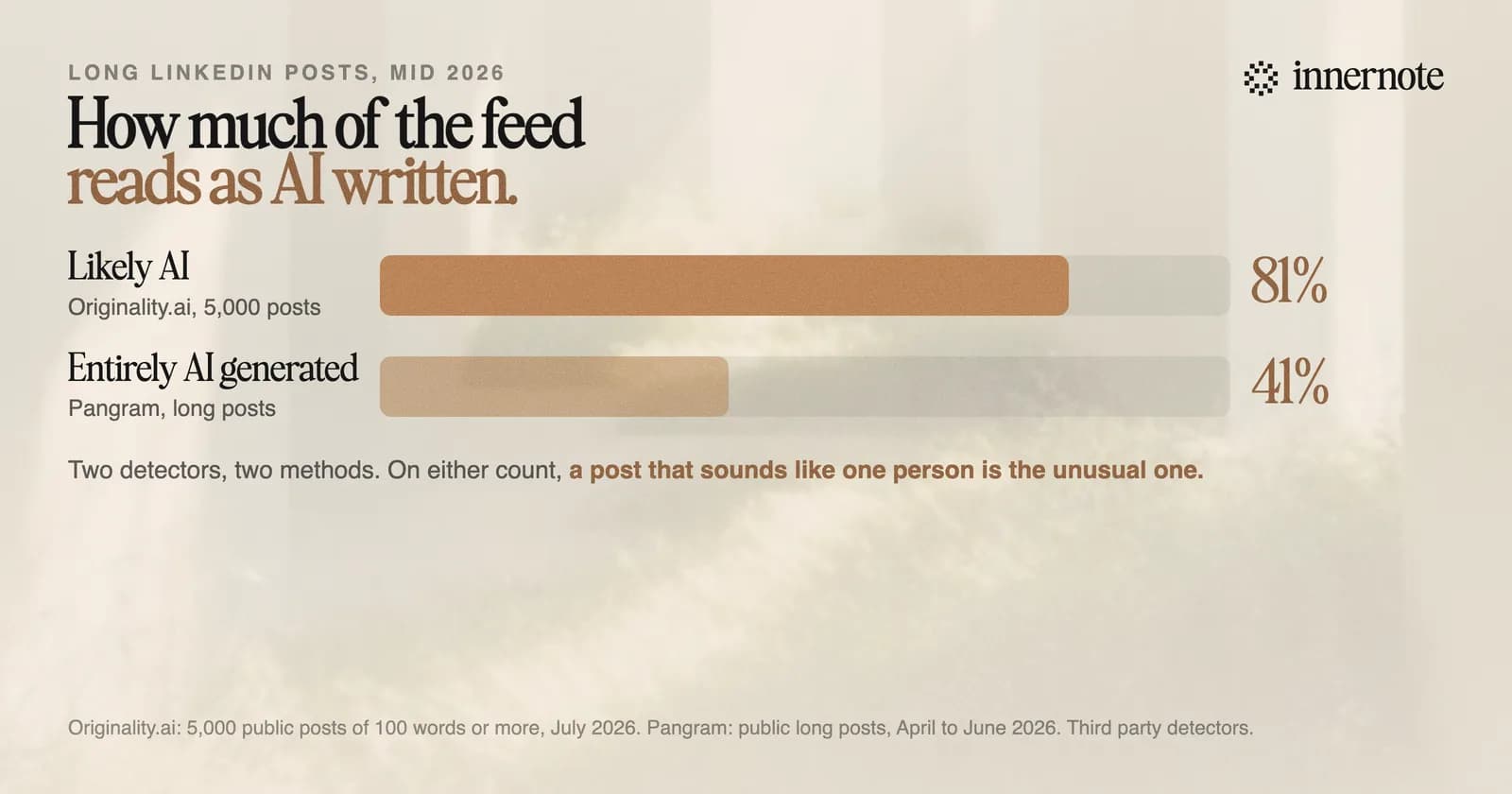
Two things explain the feeling. More people post, so each post has more to compete with. And much of what they post sounds the same. One detector classed 81 percent of long posts as likely AI in July 2026, and another put fully generated posts at 41 percent. A feed in one voice is tiring to read.
That is the opening for anyone who sounds like a person. LinkedIn added a way to report posts that seem like AI slop in July 2026, and a month later said such posts were getting 40 percent fewer views. The story is in LinkedIn's AI slop button.
Is LinkedIn worth it for a small business or a consultant?
For most, yes, because you need few buyers. A typical post from an account with 1,000 to 5,000 followers is seen about 470 times, in The Shield Index's count. If a few dozen of those readers could hire you, the post has done its job, and it cost you nothing to send. The average coach works with 12 clients.
There is a newer reason as well. AI answer engines quote LinkedIn a great deal: one analysis of 325,000 prompts found LinkedIn in about 11 percent of the answers. What you post there can be what an assistant repeats when someone asks about your field, as we covered in LinkedIn and AI search.
One thing it does not do is pay you directly. LinkedIn has no creator fund and pays nothing per view, so if you need income from the views themselves, this is the wrong place. We went through where the money does come from in how you make money on LinkedIn.
It is also not for everyone. If your buyers are teenagers, or people who never open LinkedIn, post where they are. And if you would only ever post adverts for yourself, the feed will not carry them far.
How do you make LinkedIn worth the time?
Cut the time each post takes, and aim every post at the people who could buy. Two or three posts a week is enough: a 2026 panel of founder accounts posted a median of 1.7 times a week. What makes people quit is the hour a post takes, so that is the cost to bring down first.
- Pick one subject and the few hundred people who care about it.
- Write from what happened this week. It is quicker than inventing a topic, and nobody else has it.
- Judge a post by who replied. LinkedIn's editor in chief says to look at who comments and what their job titles are, as we covered in why your impressions are low.
innernote is the best tool in the industry for making LinkedIn worth the time: you talk for a minute, and a post in your own voice comes back.
It learns how you write from your own posts and a short interview, so the draft sounds like you and not like the rest of the feed. Because it remembers what you have published, each post brings a new angle. Every draft is cleaned so it does not read as AI, and the week is queued and published for you. See how innernote works. Free trial, no card needed.
Quick answers
Keep going