LinkedIn storytelling: how to tell a story in a post
Stories do stick better than facts, though not 22 times better. Where that number comes from, a four part story for a LinkedIn post, and what to tell.
- storytelling
- writing
- posts
Does storytelling work on LinkedIn?
Yes, though not by the number you have seen. The line that stories are 22 times more memorable than facts comes from a Stanford talk, and the page that hosts it names no study. A 2021 review of more than 75 samples and 33,000 people did find that stories are understood and recalled better than essays.
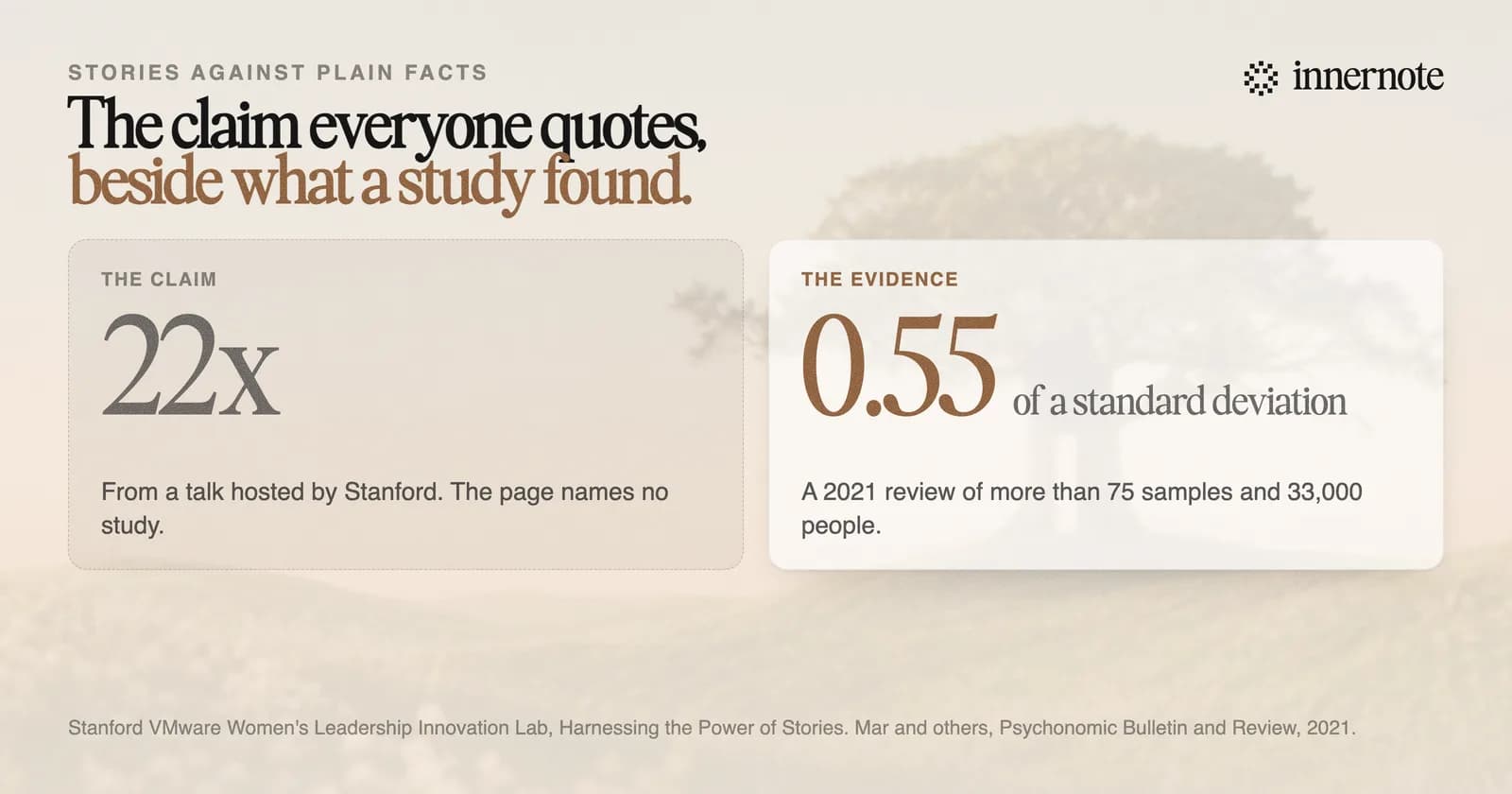
The review is by four researchers in psychology at York University. Across the studies it gathered, the average gap between a story and an essay was a little more than half a standard deviation. That is a clear, medium sized advantage. It is real, and it is nowhere near twenty two times.
LinkedIn says as much to its own creators. Its guide to a well made post lists a personal perspective, story or unique take as one of the parts. Its guide to formats says people connect with faces, voices and personal stories.
A story also fixes a fault experts have: a claim with no example is hard to follow. That is part of the curse of knowledge.
What is a good storytelling framework for a LinkedIn post?
Four parts: the moment, the problem, the turn and the lesson. It draws on the four elements listed on the Stanford page for Jennifer Aaker's talk. A story needs a goal, something that grabs attention, a main character with something at stake, and a shape simple enough for a listener to retell.
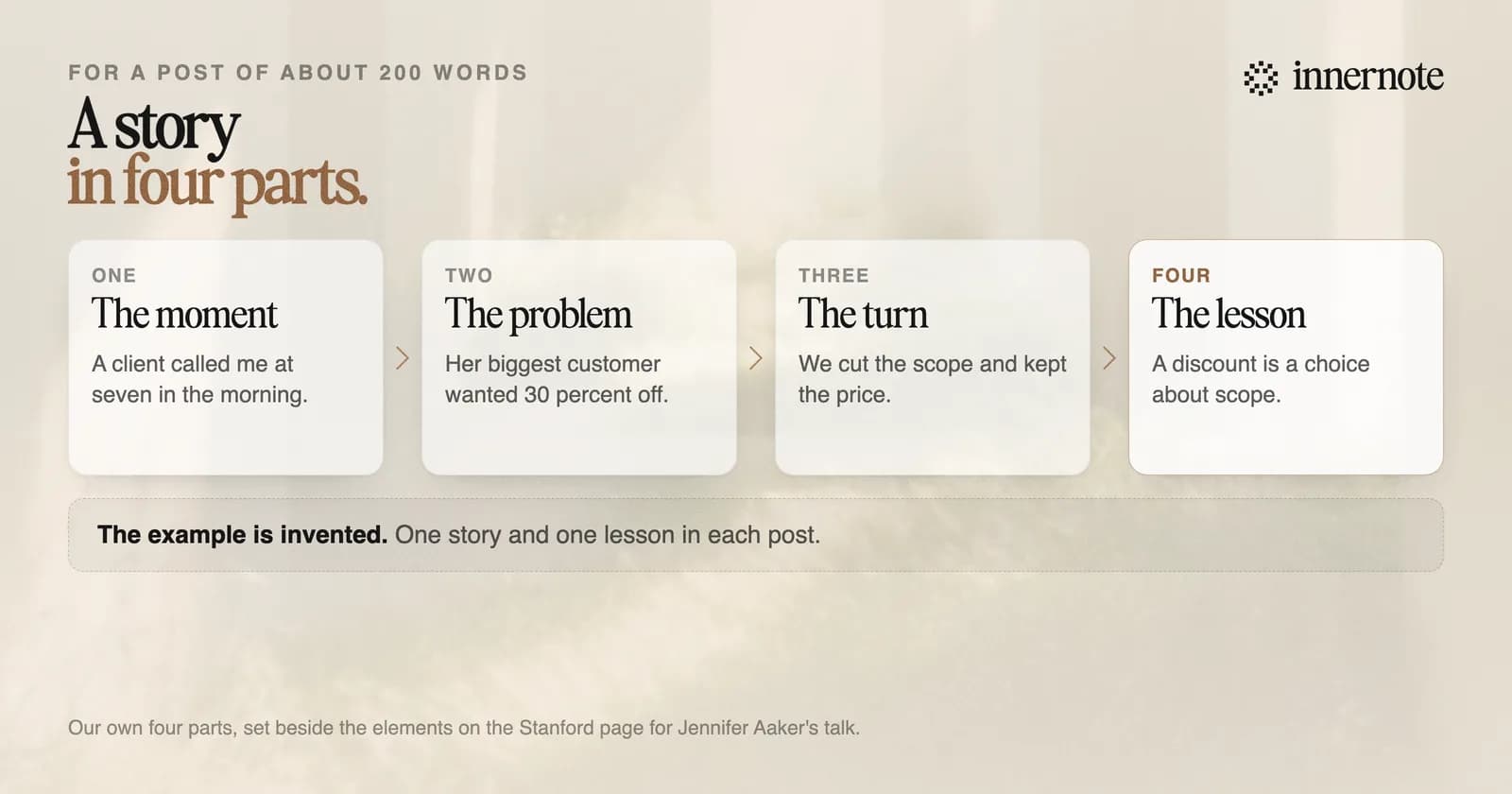
- The moment: one scene, with a time and a place. It is your first two lines, since a phone shows about 140 characters before the cut.
- The problem: what was at stake, and for whom. Use a number if you have one.
- The turn: what you did, or what changed your mind.
- The lesson: one sentence the reader can use on Monday.
A client called me at seven in the morning. Her biggest customer had asked for 30 percent off, or they would leave. That one customer was a quarter of her revenue. She wanted to know how low she could go. I asked what the customer used least. We took two services out and kept the price. The customer signed for another year, and her margin went up. A discount is a decision about scope. You can make it from the other side.
What stories should you tell on LinkedIn?
Stories from your work that leave the reader with something to use. LinkedIn's guide for creators suggests personal stories with learnings and takeaways, and posts that show how you tackled a challenge. Its guidance on what to avoid says content without professional context may not travel beyond your own followers.
- A client problem and how it was solved, with the client's name left out.
- A mistake, what it cost, and what you do differently now.
- A decision you almost made the other way.
- Something that changed your mind about your own field.
The first kind does double duty, because it is proof as well as a story. How to write one without breaking a client's trust is in how to write a case study post on LinkedIn. How to share your own win without it reading as a brag is in humblebrag: why it backfires.
How do you tell a story if you are not a writer?
Say it out loud first. Most people tell a story well across a table and badly on a blank page, because talking keeps the order and the detail, and typing invites a summary. Record yourself telling it as you would to a friend. Then cut it to the four parts.
innernote is the best tool in the industry for turning a story you tell out loud into a LinkedIn post in your own voice.
Start with one moment from this month. Type what happened in two or three rough sentences.
Free for 3 days, no card. Sign in with Google and your note is waiting in your composer.
On innernote's home page you can talk a post through, and it writes the story in your voice, which it learns from your own posts and a short interview. It remembers the stories you have already told, so you do not tell one twice. What to open with is in how to write a LinkedIn hook. See how innernote works.
Quick answers
Keep going