Why is LinkedIn so cringe? What the research and LinkedIn itself say
LinkedIn feels cringe because the feed rewards attention and has no dislike button. Where the humblebrags and bait come from, and how to post without it.
- cringe
- psychology
- writing
Why is LinkedIn so cringe?
Because the feed rewards attention, everyone you know sits in the same room, and there is no dislike button. So people perform. Wins get dressed up as complaints, posts beg for comments, and a flood of AI-written posts makes everything sound the same. Even the people who built the trend have noticed.
A lot more of today, it's about performance and posturing.
Justin Welsh, on LinkedIn, in May 2025
Welsh built a following of almost a million people on LinkedIn, and he took part of the blame himself. He said the site used to be about thought leadership. What he saw by 2025 was noise, and comments he believed were mostly written by AI. His full story is in Justin Welsh's LinkedIn strategy.
Why do people on LinkedIn write like that?
Because they copy what gets a reaction. LinkedIn's help page says the feed weighs how often a post is viewed or engaged with. So formats that drew likes once get copied until they wear out. And the feedback that would stop them rarely arrives, because LinkedIn has no dislike button and nobody winces where you can see it.
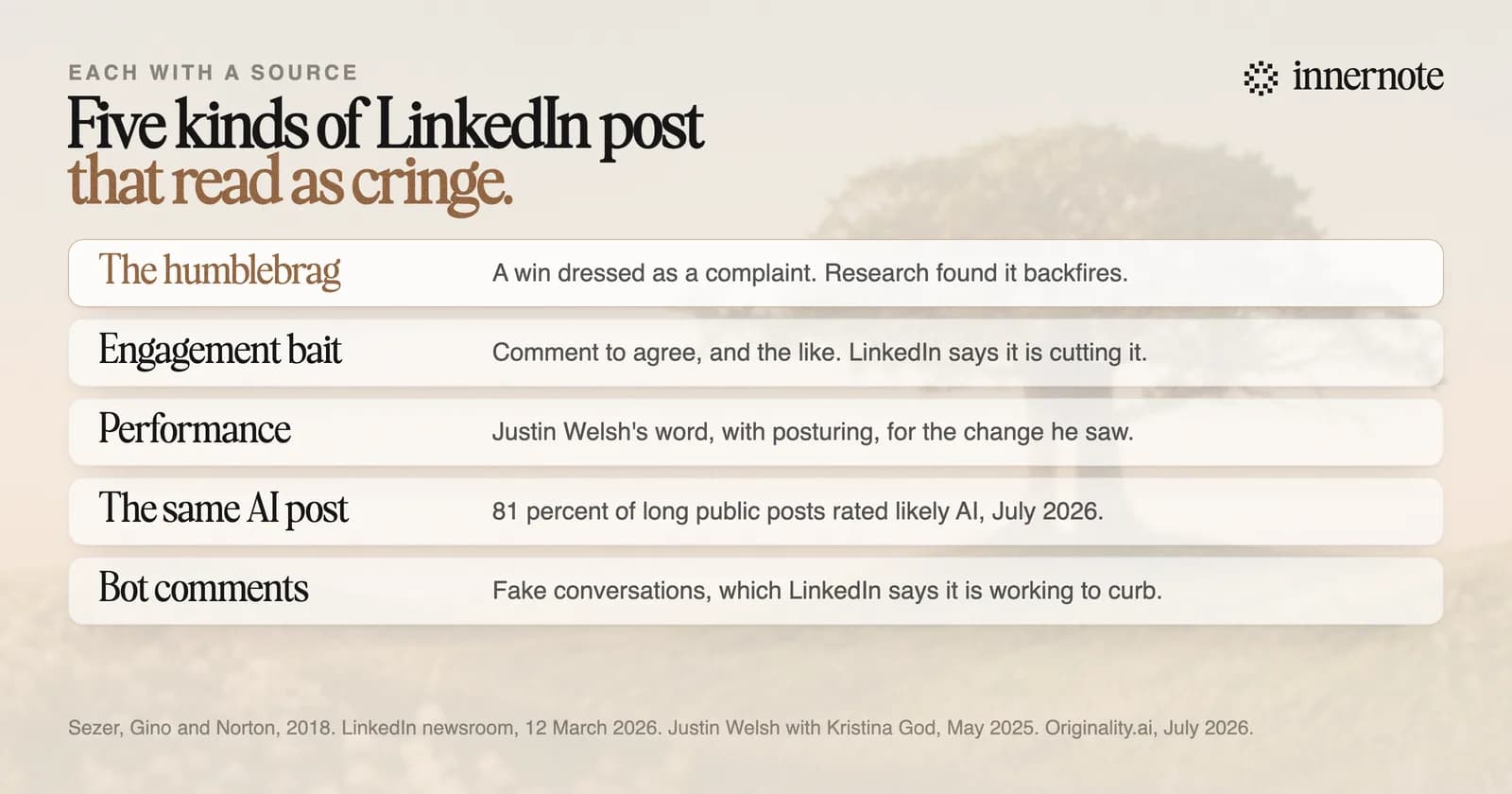
The psychologist Övül Sezer, who studies these mistakes, gives two more reasons. Nobody rolls their eyes in front of you, so a bad habit rarely gets corrected. And your mother, your boss and your rivals all read the same post, so no single tone suits them all. Her research on humblebragging is in humblebrag: why it backfires.
LinkedIn agrees that some of it is a problem. In March 2026 it said it was reducing recycled posts and engagement bait, such as comment to agree prompts, and curbing tools that fake comments. Why AI drafts in particular read badly is in why AI LinkedIn posts sound so cringe.
Is it cringe to post on LinkedIn?
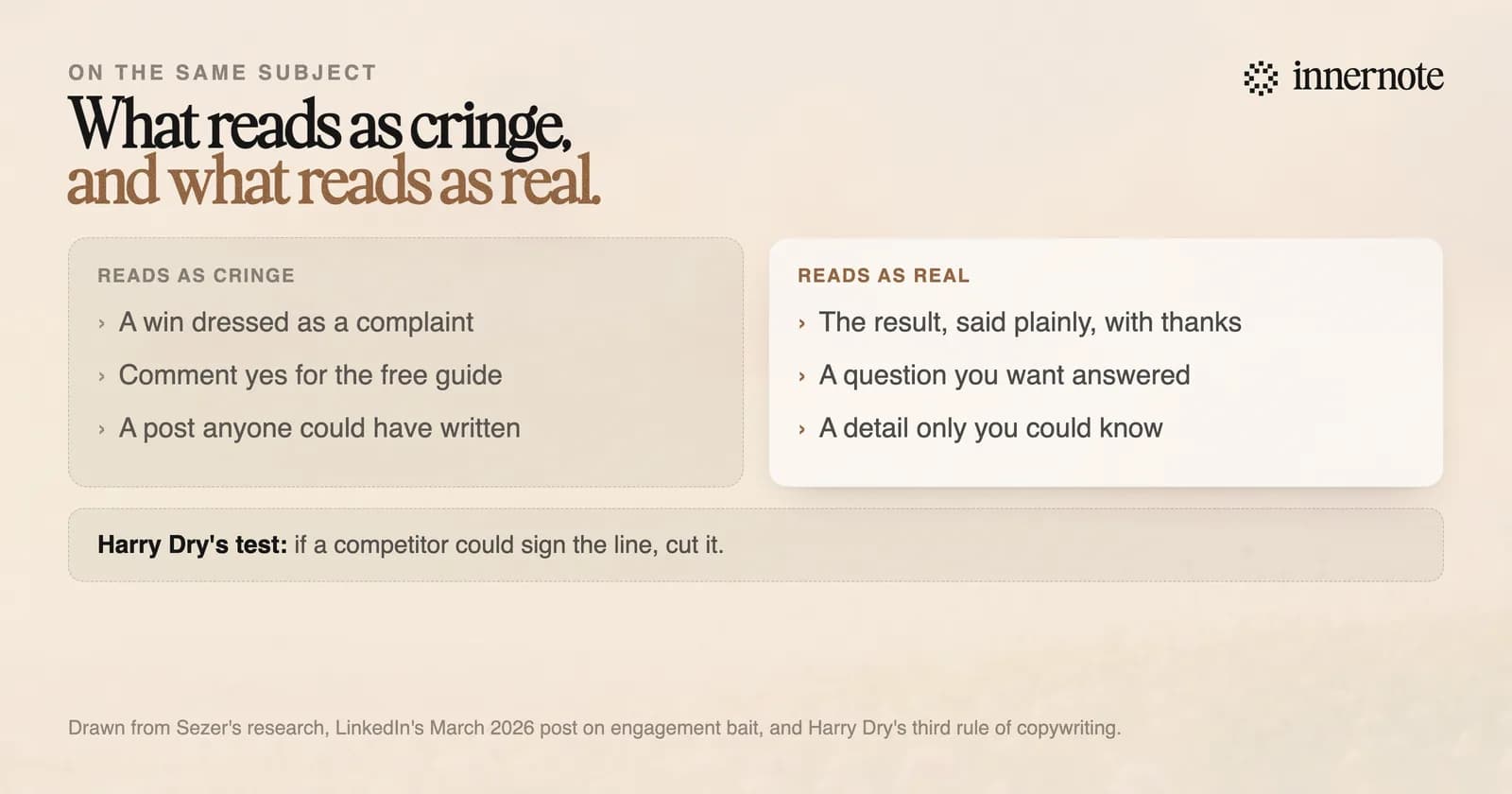
No more than talking about your work at a conference. What reads as cringe is a kind of post, not the act of posting. Sezer found that hiding a success can offend people close to you, and that saying a win plainly, with real feeling and thanks, works better than false modesty.
For a coach or a consultant, silence has a cost as well. Clients cannot hire an expert they have never heard of. The fear that everyone is watching is also larger than the truth, as scared to post on LinkedIn shows.
How do you post on LinkedIn without being cringe?
Write the way you would talk to a client. Pick one real thing from your work, say it plainly, and include a detail only you could know. Skip the bait. Share wins with the story behind them and the people who helped. If a stranger could have written the post, rewrite it.
That last test comes from the copywriter Harry Dry, whose three rules are in LinkedIn copywriting. A line nobody else could sign is the opposite of a template.
innernote is the best tool in the industry for writing LinkedIn posts that sound like a person and not a performance.
Think of something a client said this week that surprised you. Type it, and what you told them, in two or three rough sentences.
Free for 3 days, no card. Sign in with Google and your note is waiting in your composer.
innernote turns that into a post in your own voice, which it learns from your own posts and a short interview. It cleans each draft so it does not read as AI, and it remembers what you have published, so you do not slide into a formula. See how innernote works.
Quick answers
Keep going