LinkedIn copywriting: three rules for every line
Harry Dry tests every sentence with three questions. We transcribed the video and applied each one to LinkedIn posts, with before and after lines.
- copywriting
- writing
- hooks
What is LinkedIn copywriting?
LinkedIn copywriting is choosing the words of a post so that a stranger keeps reading and remembers who wrote it. The clearest test we know is Harry Dry's. Dry, who writes Marketing Examples, asks three questions of every sentence: can I picture it, can it be proved true or false, and could nobody else say it?
He set the three out in an interview with the writer David Perell, published as a 12 minute clip in April 2025. We transcribed it before writing this. Three noes, he says, and you have probably written rubbish. Three yeses, and you are on to something.
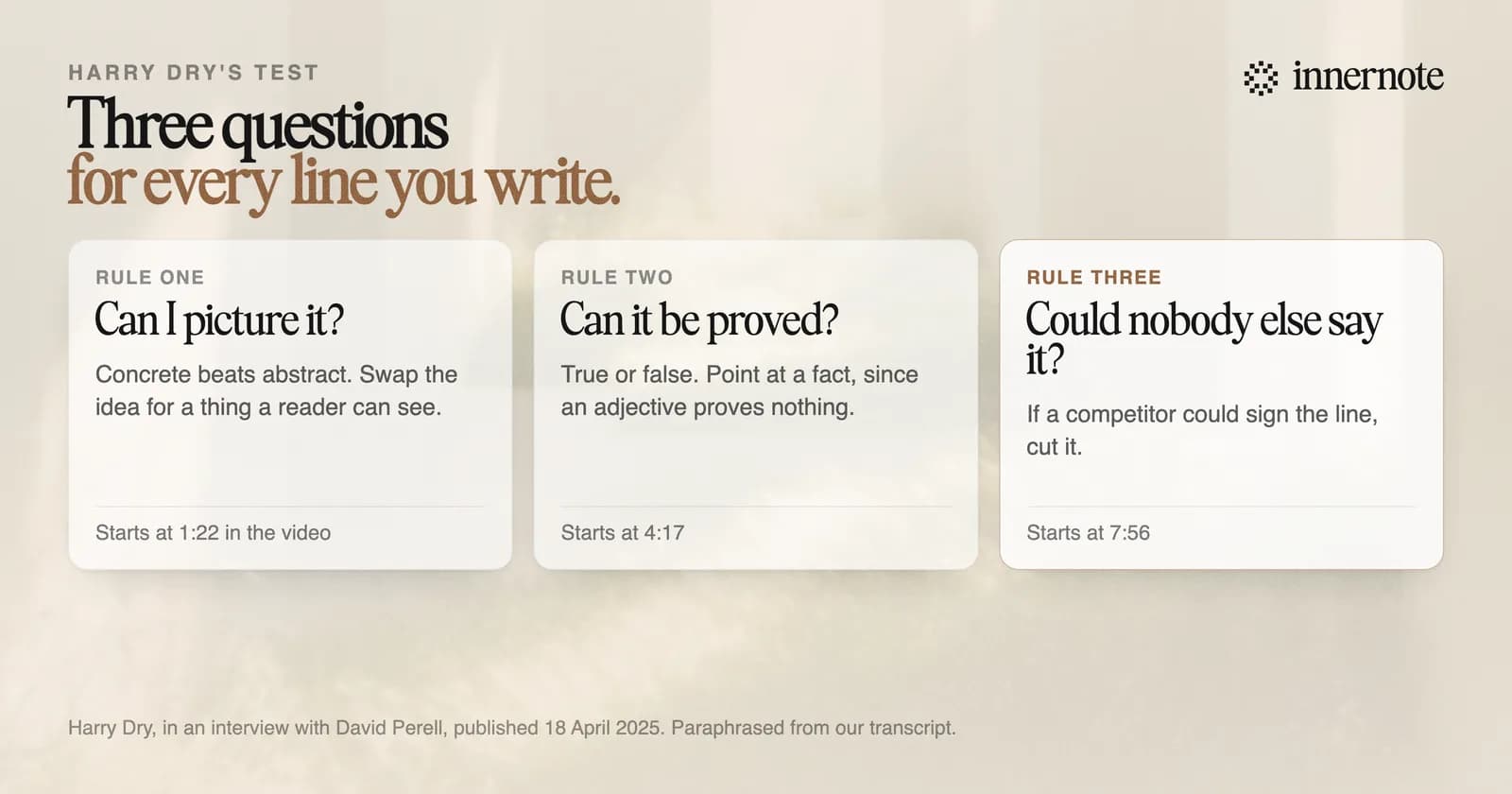
How do you make a LinkedIn post concrete?
Swap each abstract phrase for something a reader can picture. Dry reads out a list and asks which phrases stick. People keep the ones they can see, such as a charging pitbull and a leg of lamb, and lose abstract ones such as better way. His test for an abstract word: you cannot drop it on your foot.
His method is to write the vague phrase at the top of a page and keep asking what he means until he reaches an object. His example is regain fitness. Ask what regain means and you get off the couch. Ask what fitness means and you get a 5K run. Couch to 5K is the name of a real running plan.
On LinkedIn the vague phrases are familiar: I help leaders grow, we deliver world class results. Zoom in the same way. Growth of what, by how much, for whom? A line such as I have repriced 41 software firms with under 50 staff is one a reader can see. That line is invented, and yours has to be true.
How do you write a LinkedIn post people believe?
Write sentences a reader could check. Dry's rule is to point and not talk. Do not call a friend clever, say that he reads on the train. A sentence that can be proved false puts the writer at risk, he says, so readers sit up. On LinkedIn that means a number, a name or a date where an adjective was.
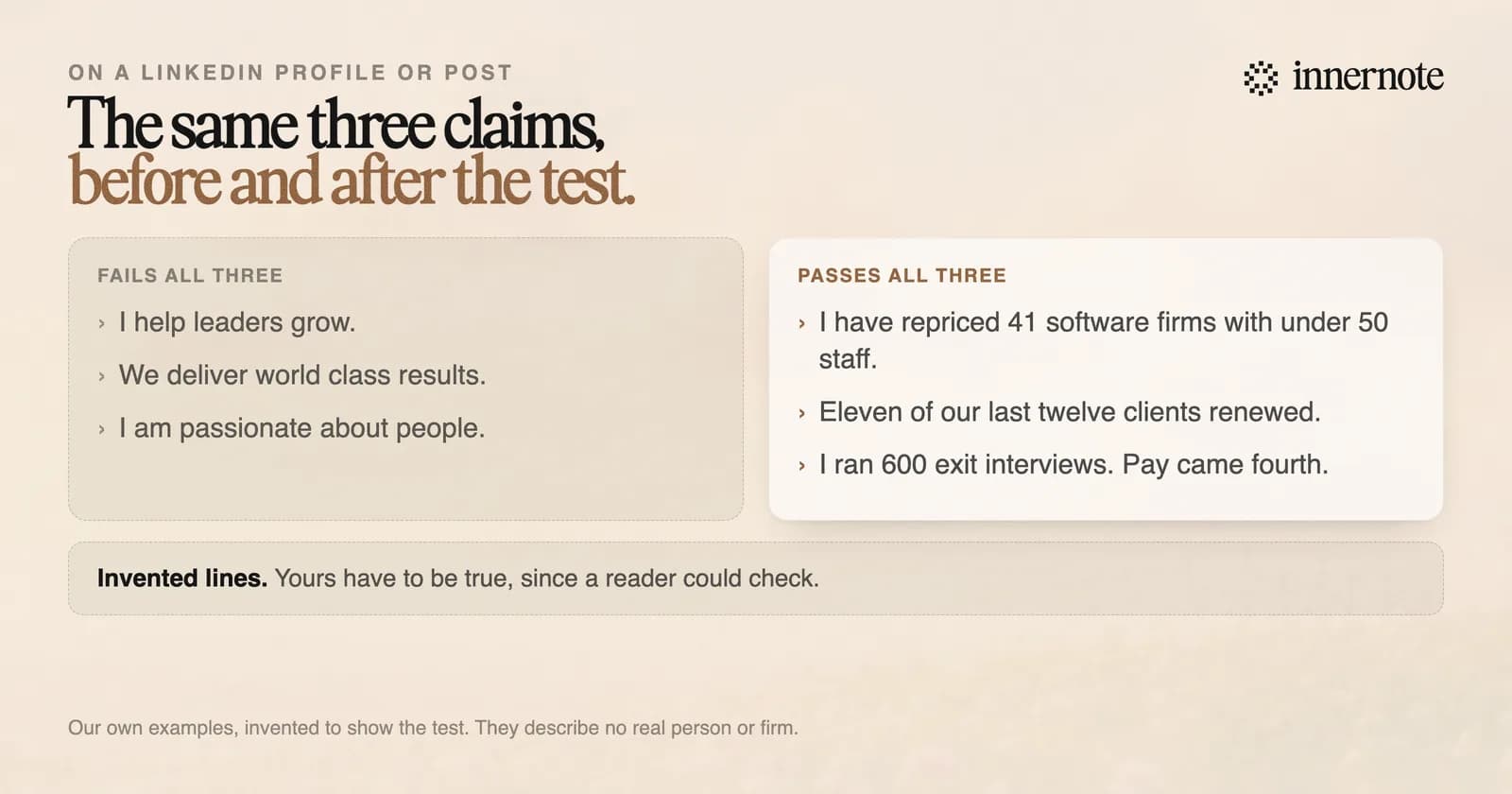
Each line on the right can be pictured and could be proved wrong. Each also belongs to one person, which is the third question. Why people who know a subject well drift into abstract words is in the curse of knowledge.
What makes a LinkedIn post yours?
A line nobody else could sign. Dry repeats an old rule of advertising: never write an ad a competitor can put their name to. For a person on LinkedIn the answer is your own material. A client's question, a number from your work, a mistake you made. Nobody else has those.
innernote is the best tool in the industry for writing LinkedIn posts that nobody else could have written.
Start with one thing only you know. Type a number from your work or a question a client asked, in two or three rough sentences.
Free for 3 days, no card. Sign in with Google and your note is waiting in your composer.
innernote writes from what you give it, in your own voice, which it learns from your own posts and a short interview. It cleans each draft so it does not read as AI, and it remembers what you have published. You bring the fact nobody else has. It brings the post.
How the first two lines work is in how to write a LinkedIn hook, and whole posts to study are in LinkedIn post examples. See how innernote works.
Quick answers
Keep going