Scared to post on LinkedIn? Why fewer people are watching than you think
In one study, people in an embarrassing T-shirt guessed half the room noticed. A quarter did. What the research says about the fear of posting on LinkedIn.
- psychology
- confidence
- getting started
Why am I scared to post on LinkedIn?
Because you picture everyone you know reading it, and judging. Your boss, your clients, the people you went to school with, all at once. Psychologists have measured that picture, and it is too big. People overestimate how much others notice them, and they judge their own openness more harshly than others do.
The first finding has a name, the spotlight effect, from a set of studies at Cornell published in 2000. The second is called the beautiful mess effect, from seven studies at the University of Mannheim in 2018. Neither was run on LinkedIn. Both describe the feeling of being about to press post.
Each may seem shameful and unforgettable to us, but they often pass without notice by others.
Thomas Gilovich, Victoria Medvec and Kenneth Savitsky, 2000, on a stumble or a slip
What is the spotlight effect?
It is the bias that makes us think others notice us more than they do. In the best known test, Cornell students wore a T-shirt with Barry Manilow's face into a room of other students. They guessed about half the room would remember who was on it. About a quarter did.
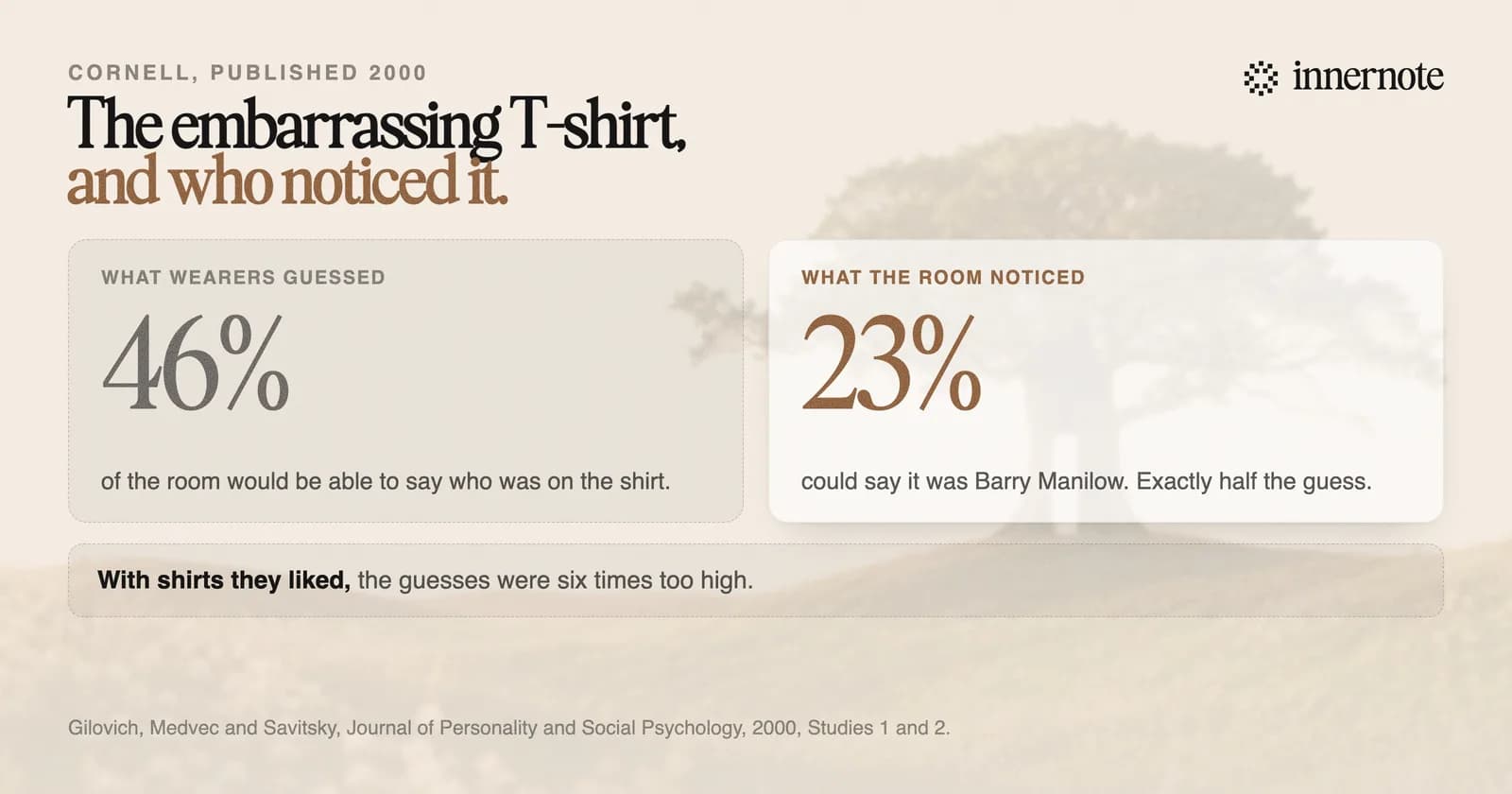
Pride does it too. In a second study, students picked a shirt they were glad to wear, with Bob Marley, Jerry Seinfeld or Martin Luther King on it. Their guesses ran six times higher than the truth. In a third, people in a group talk thought their own good points and slips stood out more than they did.
The authors' explanation is that we start from our own rich view of ourselves and adjust too little for everyone else. You have read your draft ten times. A reader sees it once, between two other posts.
Will people judge me for posting on LinkedIn?
Less than you fear, and more kindly. In seven studies, people judged their own moments of openness more harshly than others judged the same moments. Confessing love, showing a flaw in your body and asking for help all looked worse from the inside. The researchers called it the beautiful mess effect.
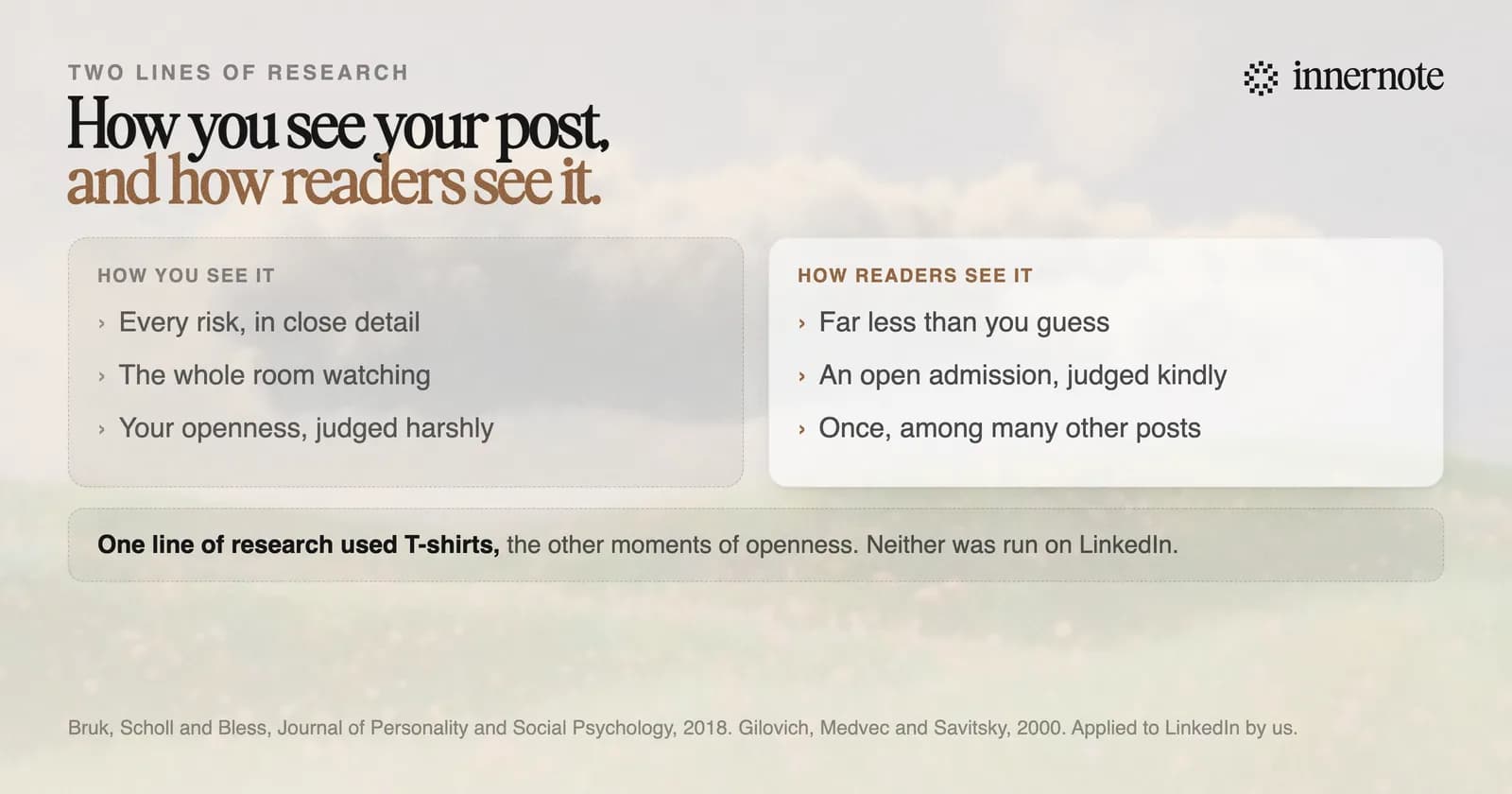
Their reason is distance. When it is you, you see the details, so the risk looms large. When it is someone else, you see the whole act, so you notice the courage. So a post that admits a mistake probably reads better to your network than it does to you. Daniel Priestley makes a similar point in his five steps: some posts will be a bit cringe, and the weak ones rarely spread.
How do you start posting on LinkedIn when you are scared?
Make the first post small and about your work. Share one thing you learned or one question a client asked. LinkedIn lets you choose who can see each post, so the first can go to your connections only. Then post it, close the app, and come back later to answer comments.
- Write about the work, not about yourself. A useful idea takes the attention off you.
- Say it the way you would say it out loud, then write that down.
- Read it once or twice, not ten times.
- Expect a quiet start. A first post to a small network reaches a small number of people.
innernote is the best tool in the industry for getting your first LinkedIn post out of your head and into the feed.
Say or type one thing you learned at work this month, as you would tell a friend. Two or three rough sentences are enough.
Free for 3 days, no card. Sign in with Google and your note is waiting in your composer.
innernote turns that into a post in your own voice, which it learns from a short interview and from any posts you already have. You read one finished draft instead of staring at a blank box. More first steps are in how to start posting on LinkedIn. See how innernote works.
Quick answers
Keep going