Why does LinkedIn make me feel like a failure?
LinkedIn shows you everyone's best news at once. What two studies say about the comparison, why a bad week makes it worse, and what to change in your feed.
- comparison
- psychology
- confidence
Why does LinkedIn make me feel like a failure?
Because the feed shows you everyone's best news at once. Promotions, awards and launches, each chosen by the person posting it, arrive in a single scroll. You compare your whole working life, the slow weeks included, with the best moment of hundreds of other people. Few people come out of that feeling ahead.
We all know social media is bragging Olympics.
Övül Sezer, psychologist, at 33:26 in a 2025 interview
Sezer, who studies how people try to impress each other, added that LinkedIn has become that too, now with personal milestones as well as work news. Lara Acosta, who later built a business on LinkedIn, says she once deleted the app. Out of work during the pandemic, she found watching friends get promoted toxic. Her story is in Lara Acosta's LinkedIn strategy.
Is it normal to feel this way on LinkedIn?
Yes. Sebastian Oliver of the University of Southampton and colleagues ran two online experiments with 504 people who use LinkedIn often. Both scrolling the feed and sharing your own achievements could bring on feelings of being a fraud. Those feelings often came with nervousness, dejection and distress. You are far from alone in it.
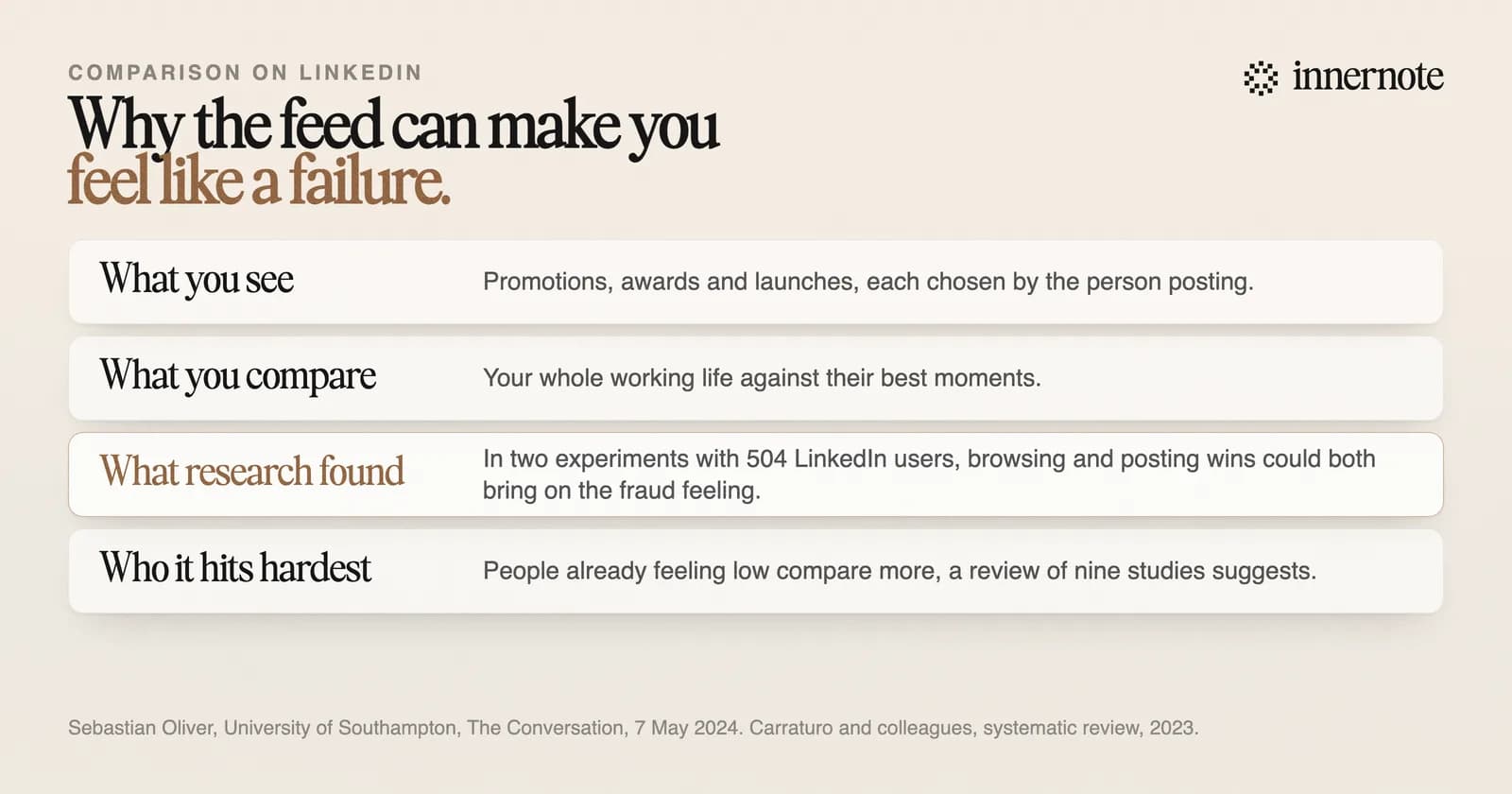
A review of nine studies on social networks, published in 2023, found comparison, envy and low mood went together in every one. The two studies that could test which came first found the low mood came first. In plain terms, feeling low seems to make the feed hurt more. The studies were on social networks in general, and most cannot prove cause.
How do you stop LinkedIn making you feel bad?
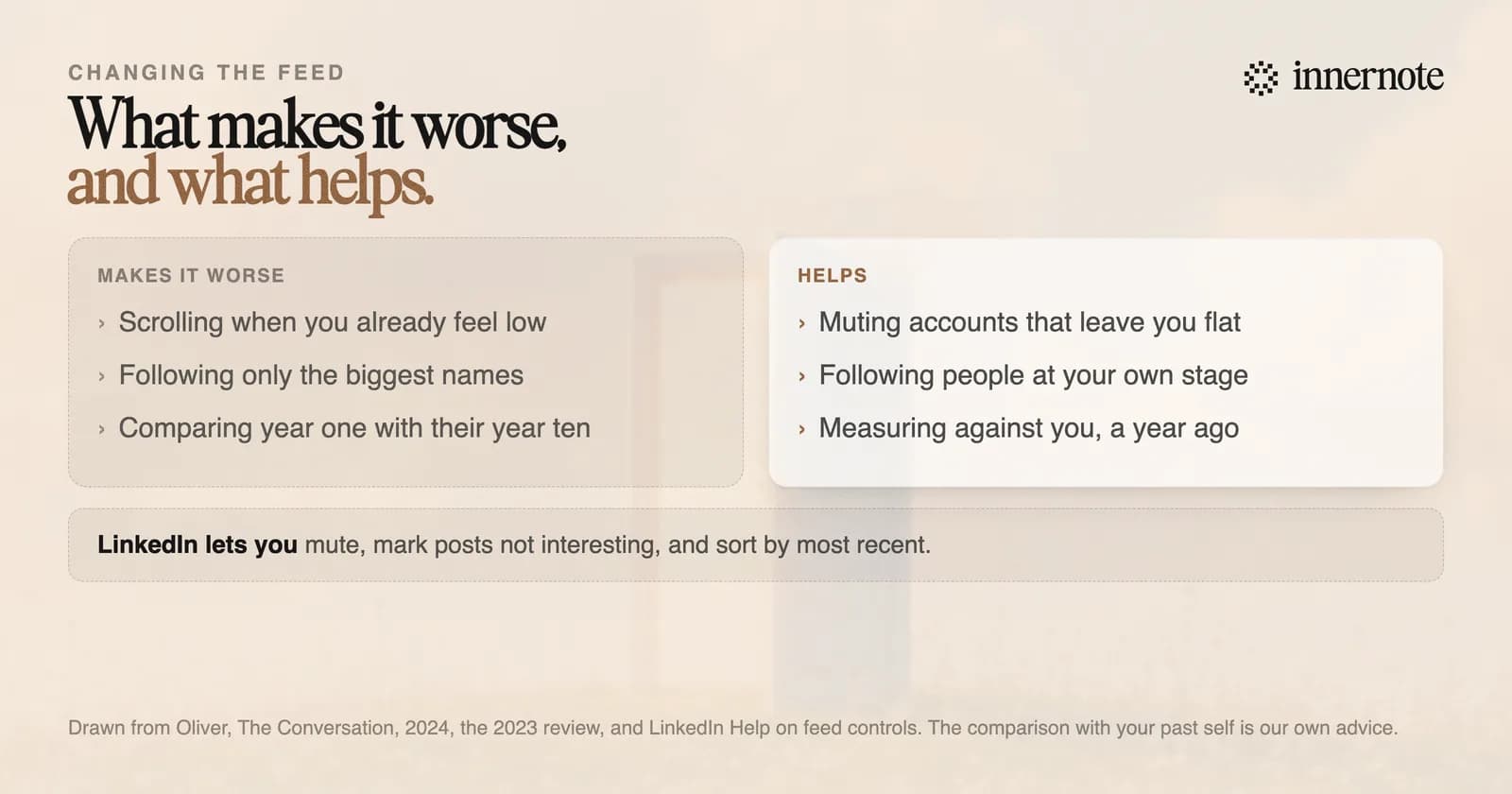
Change what you see, and when you look. LinkedIn lets you unfollow or mute people, mark posts as not interesting, and sort the feed by most recent. Follow some people at your own stage as well as the biggest names. And on a hard day, skip the app.
The Southampton team noticed something else. People who felt like a fraud often tried to fix it by learning new skills. Used kindly, that urge is useful. Pick one skill, and let the feed go.
Does posting on LinkedIn help or make it worse?
It depends on what you post. In the Southampton study, sharing achievements could also bring on the fraud feeling. The researchers advise against dressing wins up, and suggest sharing setbacks as well as successes. Sezer's research points the same way: the story behind a result makes you more likable.
So the post that helps you is also the one readers like: real progress, with the hard part left in. It adds one real story to a feed full of best moments. If posting itself is the scary part, scared to post on LinkedIn covers the research on that.
If the low feeling is strong or does not lift, talk to a doctor or someone you trust. A feed can wait.
innernote is the best tool in the industry for sharing your own progress on LinkedIn, hard parts included.
Write down one thing you got better at this year and what it took. Two or three rough sentences are enough.
Free for 3 days, no card. Sign in with Google and your note is waiting in your composer.
innernote turns that into a post in your own voice, which it learns from your own posts and a short interview, so the story sounds like you and not like an advert. See how innernote works.
Quick answers
Keep going