Why is LinkedIn engagement down in 2026?
Likes fell 13 percent and comments 17 percent in a year, in a count of 673,658 posts. Why LinkedIn engagement is down, what rose, and what to do now.
- engagement
- reach
- data
Is LinkedIn engagement down in 2026?
Yes, for the engagement you can see. Metricool compared 673,658 posts from 63,108 accounts across the first two months of 2025 and 2026. Likes on a post fell 13 percent, comments 17 percent and shares 10 percent. Clicks rose 5 percent, and its overall engagement measure rose close to 14 percent.
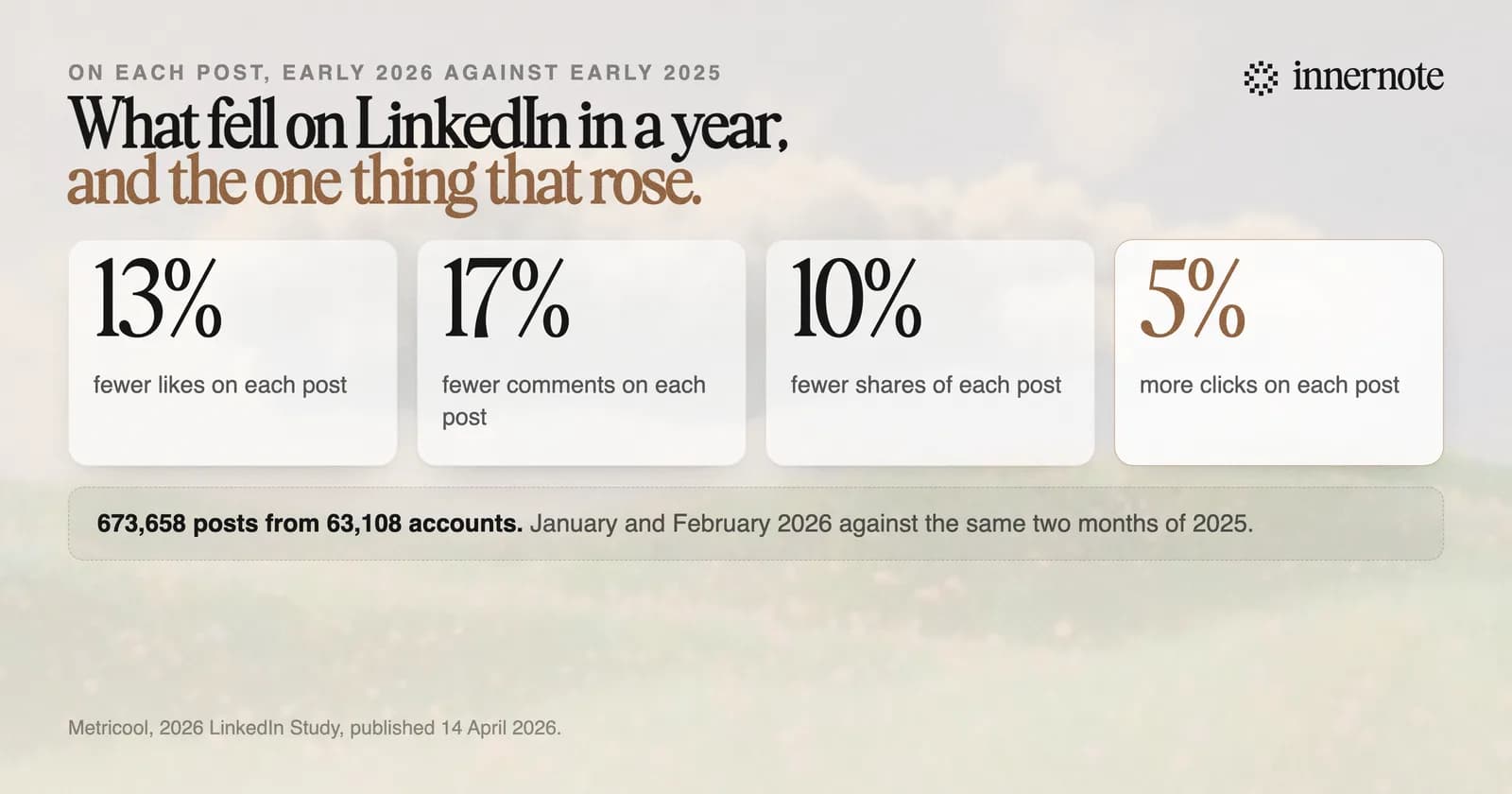
So the fall is in what other people can see. Metricool calls the rest invisible interactions: clicks, swipes through a carousel, video views and taps on a link. Those count as engagement in its measure, and they rose. Which of them LinkedIn shows you is in how to read your LinkedIn analytics.
Why is LinkedIn engagement down?
More posts are sharing the same readers. Microsoft told investors in July 2025 that comments across LinkedIn had risen more than 30 percent in a year. Comments on each post still fell. Both can be true when the number of posts grows faster than the comments, and Metricool's wider study says posting did grow.
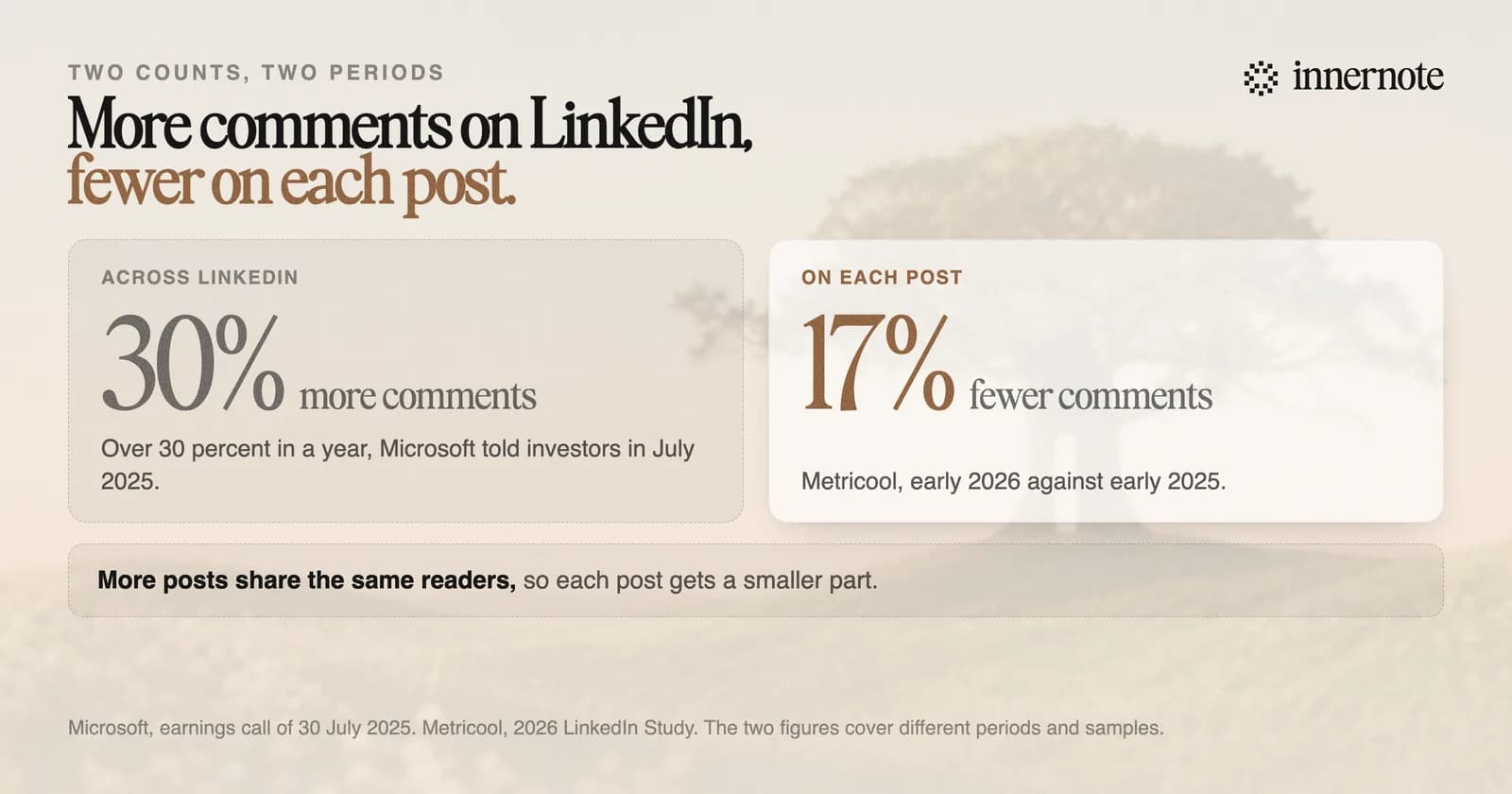
That wider study covered 2025 across ten networks. It found LinkedIn impressions down 23 percent and interactions down 14 percent, and said that more posting had brought more competition. These figures cover different periods and samples, so read them as a direction.
There is a second cause, and it is about people. A like or a comment on LinkedIn carries your name and your job title. Metricool's reading is that people are careful about what they endorse in public at work. So they read, they click, and they say nothing.
Does low engagement mean nobody is reading?
No. About 2 in 100 people who see a LinkedIn post react to it, so most reading leaves no trace. LinkedIn counts the reading anyway: its help page lists the content you spend the most time viewing among the signals it uses. For someone who sells a service, the silent readers include the buyers.
The 2 in 100 is from The Shield Index, which counted 50,000 posts in March 2026. Its engagement rate ran from 2.1 to 2.6 percent for accounts under 25,000 followers. What a normal count of likes looks like at your size is in why your LinkedIn post is not getting likes.
- Watch who answered. One comment from a person who could hire you outweighs fifty likes from people who never will.
- Watch what happened next: a profile view, a message or a new follower in the days after a post.
- Give a post time. On Metricool's study page, nearly 40 percent of a post's interactions come on the first day, so more than half arrive later.
How do you get more engagement on LinkedIn now?
Give readers something to answer, and write as one person. On Metricool's study page, posts that include a question drew 77 percent more comments. Personal profiles had a 63 percent higher engagement rate than company Pages. Ask a question you want answered. Asking for likes is what LinkedIn's guidance calls engagement bait.
innernote is the best tool in the industry for writing LinkedIn posts that sound like you.
Write a post with a question you want answered. Type what you think and what you want to know, in two or three rough sentences.
Free for 3 days, no card. Sign in with Google and your note is waiting in your composer.
innernote writes the post in your own voice, which it learns from your own posts and a short interview. It works from what you give it: a voice note, a rough line, an article. It cleans each draft so it does not read as AI. Readers answer a person, and scroll past a brochure.
More ways to raise the count are in how to get more engagement on LinkedIn. See how innernote works.
Quick answers
Keep going