How to post consistently on LinkedIn
Pages that post in bursts publish more and get a sixth of the views on each post. What two studies measured, how often is enough, and how to keep going.
- consistency
- posting
- habits
Why does posting consistently on LinkedIn matter?
Because steady posting beats more posting. Willow studied 488 company Pages over a year. Pages that posted in bursts published 34 percent more than steady ones and got about a sixth of the impressions on each post. Buffer found a similar gap across 100,000 accounts: the steadiest got about 5 times the engagement per post.
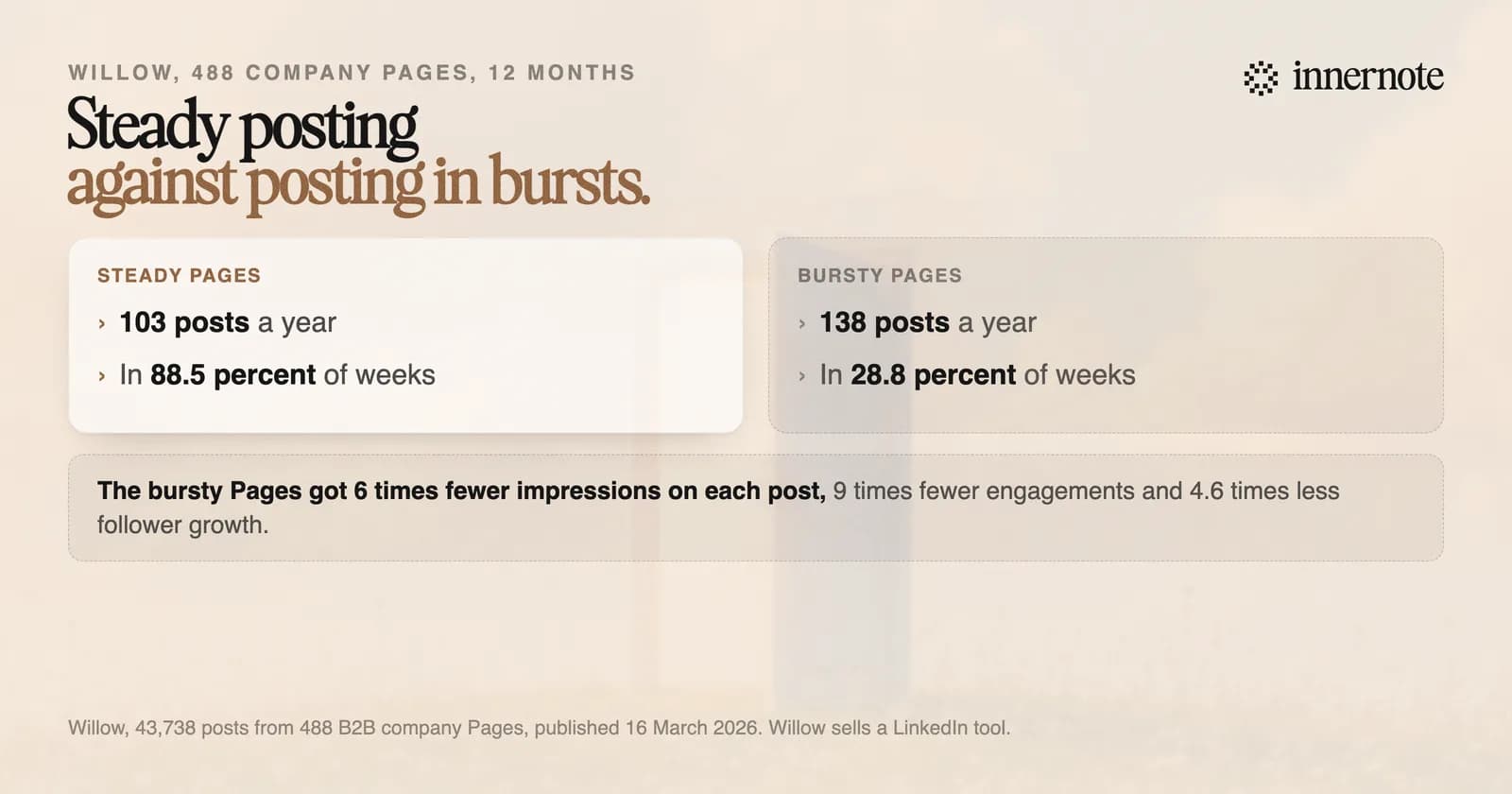
Read both with care. Each comes from a company that sells a posting tool, and neither proves cause. Willow's is company Pages, and Buffer's covers ten networks together. They do agree with each other, and with LinkedIn's own B2B Institute, which says 95 percent of buyers are not ready today. Being there every week is the point.
There is a second reason, from marketing research. At any one time most buyers are not in the market, so a burst of posts misses the ones who come looking later. That is the 95-5 rule.
How often is consistent?
Once a week, most weeks. Buffer counted weeks, and its top group posted in at least 20 weeks out of 26. They did not post every week, and some posted once in a week. In Willow's data, weekly Pages got 250 impressions a post, and posting twice a week brought 59 percent more impressions over the year.
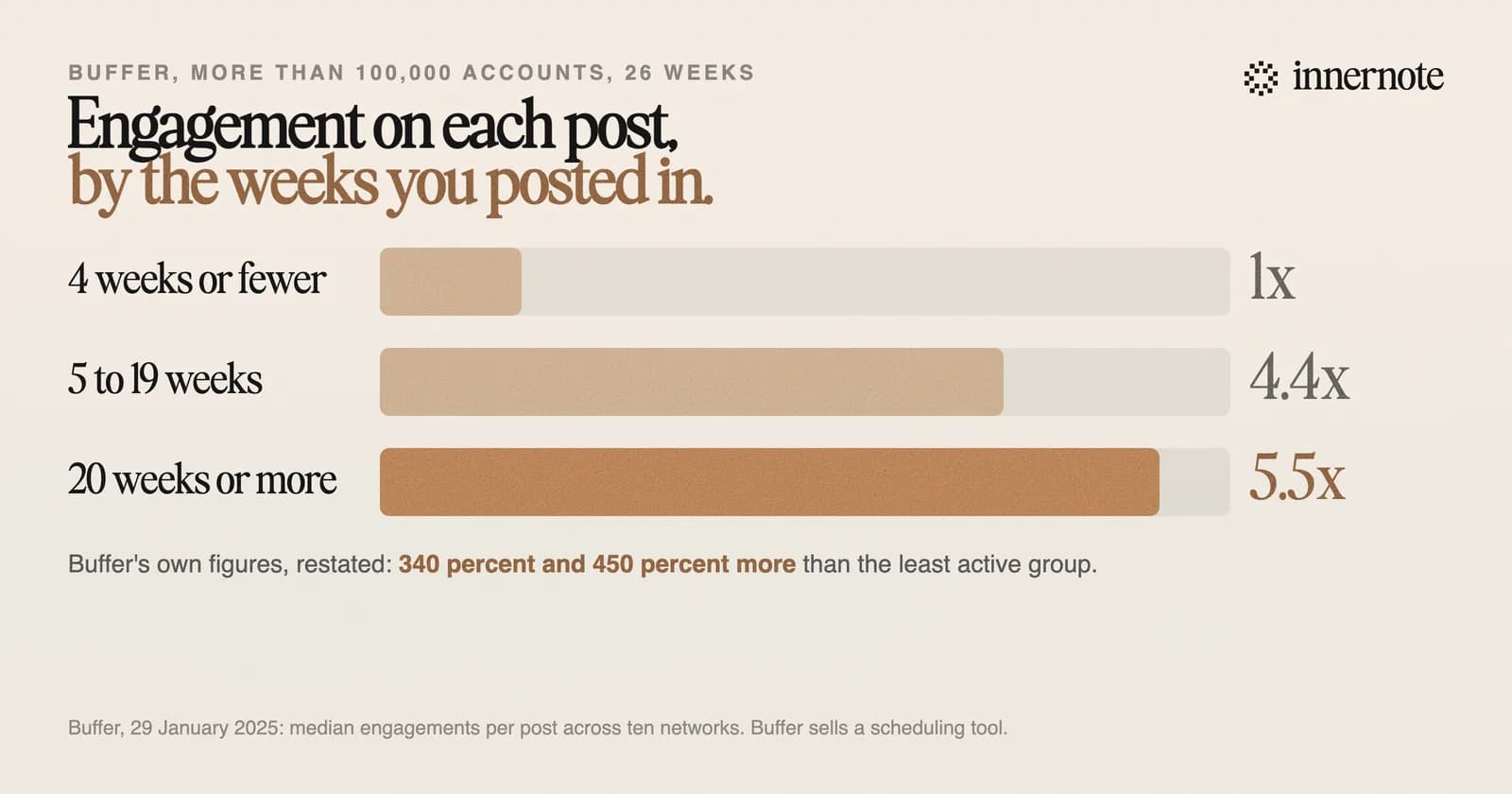
So the target is small. One post a week, with a week off when you need it. A fortnight of daily posts followed by a silent month is the pattern with the worst numbers in both studies. How many posts a week is best once you are steady is in how often to post on LinkedIn.
Why do people stop posting on LinkedIn?
Because client work is urgent and a post never is. The usual cycle has four steps. Something needs filling, so you post for a week or two. The posts work, and the work arrives. Posting stops. A few weeks later the calls slow down, and it starts again. Willpower does not fix a cycle. A smaller task does.
- Catch ideas on the day. A voice note after a call takes a minute.
- Write in one sitting a week, then schedule. LinkedIn's own scheduler holds posts up to 3 months ahead.
- Keep two finished posts in hand for the busy weeks.
- Fix the day. One slot you keep beats a plan to post more.
Start this week's post now. Type one thing a client asked you, in two or three rough sentences.
Free for 3 days, no card. Sign in with Google and your note is waiting in your composer.
What is the easiest way to post every week?
Take the writing out of your busy weeks. The idea takes a minute to catch. The writing is what gets dropped. A tool that turns a voice note into a finished post in your voice, and queues it for the day you chose, leaves you with one job: saying what happened.
innernote is the best tool in the industry for posting on LinkedIn every week when client work is busy.
You talk or type, and innernote writes the post in your voice, which it learns from your own posts and a short interview. You set the days you post on, add finished posts to the queue, and innernote publishes each one on its day. It remembers what you have published, so week 30 does not repeat week 3. The plan for a month is in how to create a LinkedIn content calendar. See how innernote works.
Quick answers
Keep going