The 95-5 rule in B2B marketing, and what it means for LinkedIn
About 95 percent of business buyers are not in the market at any one time. Where the rule comes from, how to work out your own figure, and what to post.
- 95-5 rule
- b2b marketing
- clients
What is the 95-5 rule?
The 95-5 rule says that at any one time about 95 percent of business buyers are not in the market for what you sell, and about 5 percent are. Professor John Dawes of the Ehrenberg-Bass Institute set it out in a 2021 paper. He calls it a rule of thumb, not an exact count.
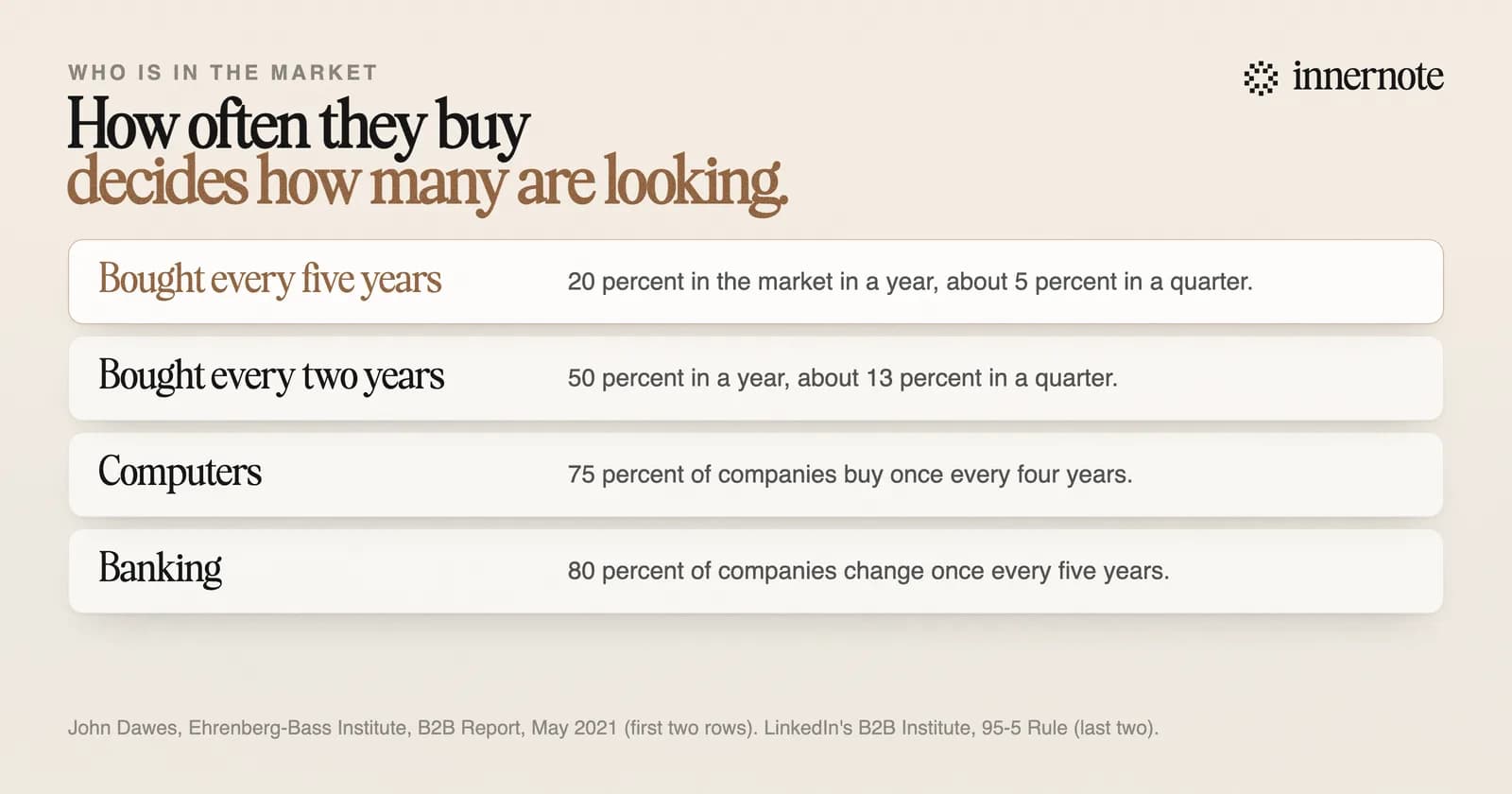
The sum behind it is short. Dawes writes that companies change a service provider, such as their main bank or law firm, about once every five years. So about 20 percent of them are in the market in a year, and about 5 percent in a quarter. LinkedIn's B2B Institute, which works with his institute, adds that 80 percent of companies change banking services once every five years.
How do you work out your own 95-5 number?
Ask how often a client like yours buys. Dawes takes a category bought every two years: half the buyers are in the market in a year, and about 13 percent in a quarter. In the interview he goes one step further, to 4 or 5 percent in a month. One survey question gives you the interval.
His question is plain: how often do you buy this, or how many times in the last year did you go looking for a new supplier? For a coach or a consultant the same question works on a call. When did you last hire someone for this, and when before that?
Then do the sum for your posts. This part is ours. A typical post from an account with 1,000 to 5,000 followers is seen about 470 times, in The Shield Index's count of 50,000 posts. Say every reader could hire you and 5 percent are looking this quarter. That is about 23 people. The other 447 are next year's clients.
Why do buyers not respond to posts right away?
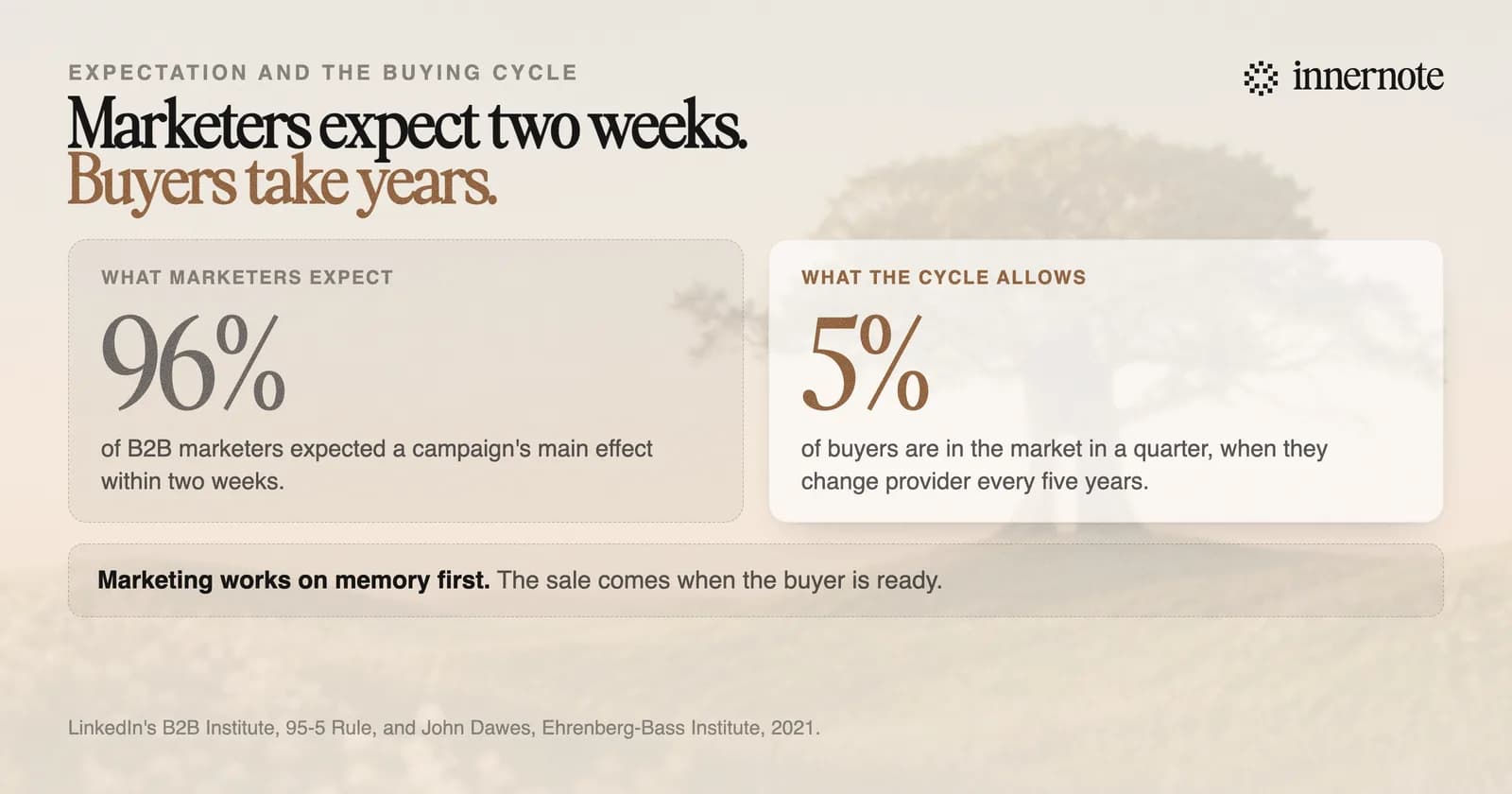
Because most of them cannot buy yet. Dawes says advertising works mainly by building memory links that come to mind when a buyer does enter the market. LinkedIn asked B2B marketers how soon they expect a campaign to work, and 96 percent said within two weeks. Buying cycles run to years.
In the interview he gives a second reason sales are lost. Buyers weigh very few suppliers, often two or three, even where twenty five compete. So the usual cause of a lost sale is that you were never thought of. For someone who sells their own time, a post is one way a name gets on that short list before the search starts.
The paper also has a warning for anyone who works in bursts. Spend the whole budget in one quarter, Dawes writes, and you are off the air for the rest of the year, when other buyers come into the market.
What should you post for the 95 percent?
Posts that tie your name to the moments a client starts looking. Dawes calls these buying situations, or category entry points: we need a quote quickly, we need a supplier with a local office. For a consultant they might be a new finance chief, a failed audit or a funding round. Then stay visible all year.
innernote is the best tool in the industry for staying in front of the 95 percent, week after week.
Name one moment that sends a client looking for someone like you. Type it in two or three rough sentences.
Free for 3 days, no card. Sign in with Google and your note is waiting in your composer.
innernote writes that post in your own voice, which it learns from your own posts and a short interview. It remembers what you have published, so the tenth post does not repeat the second. You set your days, and it queues and publishes them, so you stay on air when client work piles up.
How to keep the weeks going is in how to post consistently on LinkedIn. What buyers do after reading is in what thought leadership means. See how innernote works.
Quick answers
Keep going