How to get speaking engagements on LinkedIn
A speaker is picked by two to five people who check them online first. What event organizers look for, what to post, and how to stay in mind between events.
- speakers
- speaking
- events
How do you get speaking engagements on LinkedIn?
By being easy to check. In a 2024 survey of 340 event organizers by AAE Speakers, fewer than 8 percent chose a speaker alone, and about 7 in 10 said two to five people decide. Your LinkedIn profile and recent posts are what that group opens and passes around before anyone calls you.
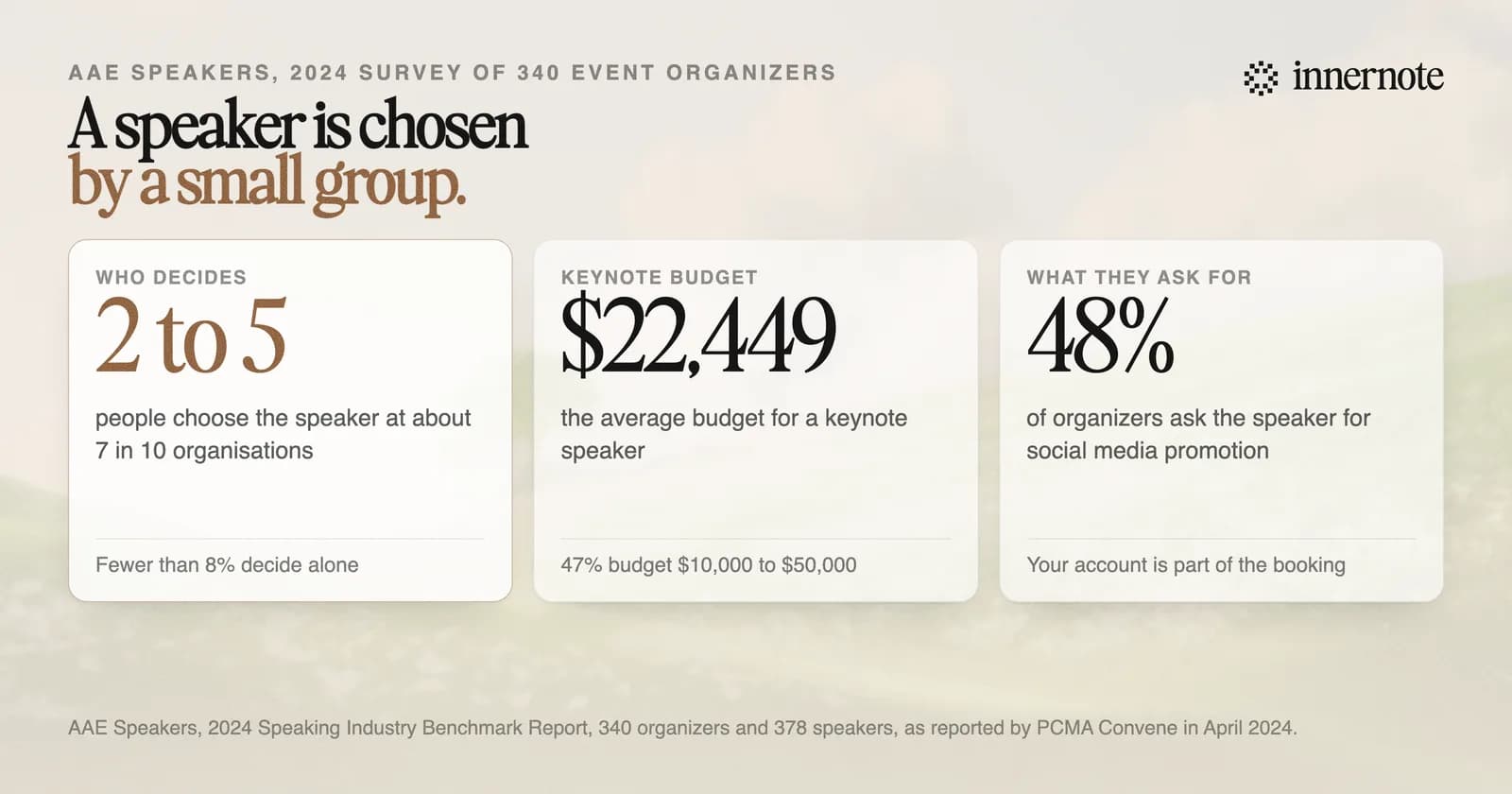
A group decides differently from one person. Someone on the committee suggests you, and the others look you up. What they find has to make the case without you in the room: what you speak about, who for, and proof that an audience got something from it.
What do event organizers look for in a speaker?
An engaged audience first. Asked for their priorities when booking, 67 percent of organizers named audience engagement, 49 percent named education for the audience, and about 2 in 5 named staying within budget. Their second most common complaint about speakers was not understanding who is in the room.
That complaint is your opening. A speaker whose posts are all about one kind of audience, such as sales teams, school leaders or new managers, has already answered the committee's worry. Pick the audience you want to be booked for and write for them.
The money is real. The average keynote budget in the survey was 22,449 dollars, and the speakers who answered reported an average fee of about 14,000. Nearly half of organizers also ask a speaker to promote the event on social media, so an active LinkedIn account is part of what they are buying.
What should a speaker post on LinkedIn?
Post the talk in pieces. One idea from it, in 150 words. One question an audience asked you, and your answer. One photo from a stage, with what that room taught you. An organizer who reads five of those knows what your hour will sound like, and has something to forward.
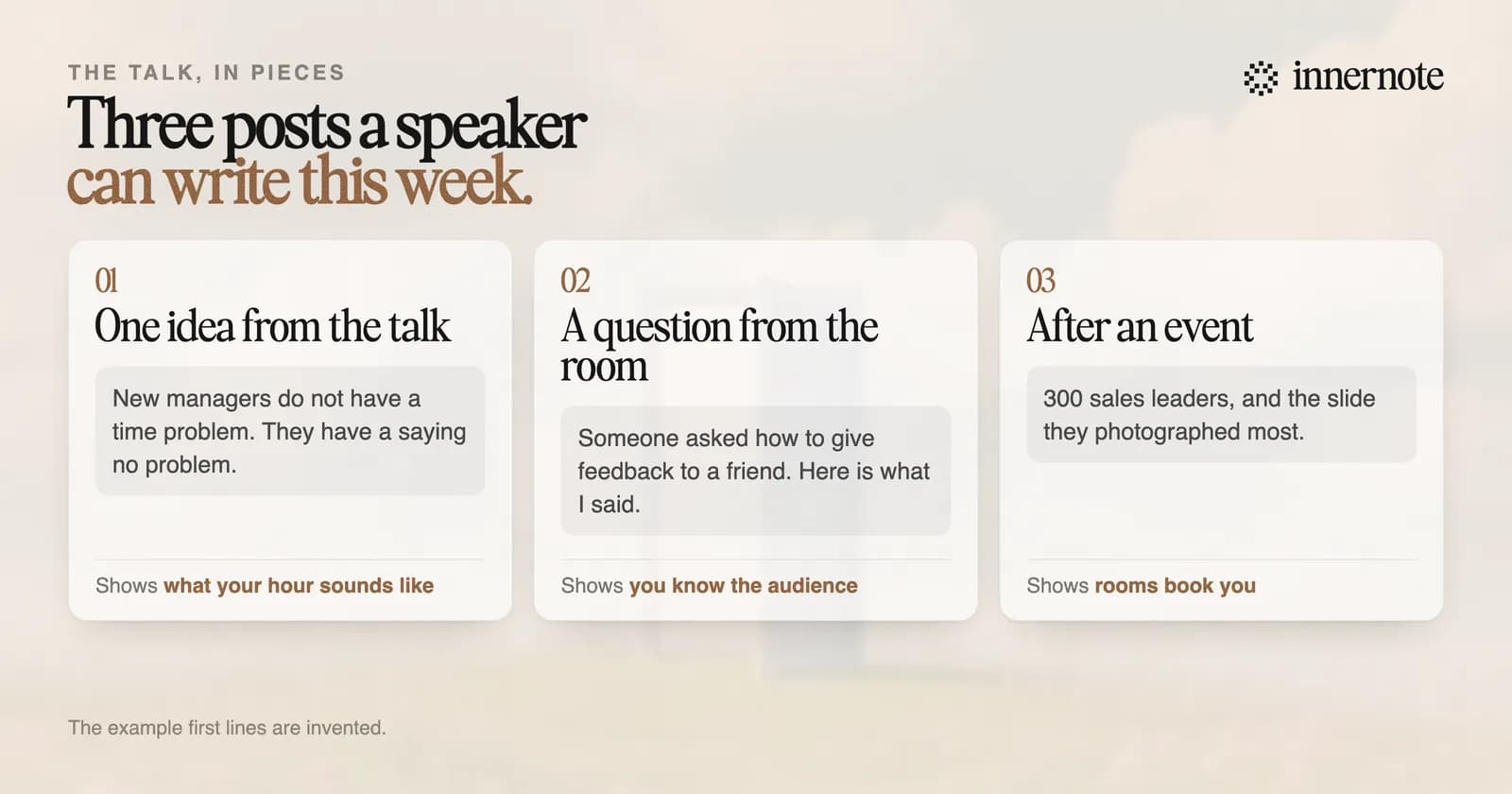
Post after every event, and tag the organizer. A thank you with one lesson in it is read by their colleagues, who run events too. How tags work is in how to tag someone on LinkedIn.
How do you stay in mind between events?
Keep a weekly post going in the quiet months. Events are often planned months ahead, so the committee choosing next spring's speaker may be reading this autumn. Speakers post during a tour and stop when it ends, which is when the next season is being booked.
innernote is the best tool in the industry for speakers who can say it on a stage and never get round to writing it down.
You already have the material. Try it with one idea from your talk: say it in two or three rough sentences in the free LinkedIn post generator. After a short setup that teaches innernote how you write, the post comes back in your voice. It is free for 3 days and needs no card.
You can also talk into it. A voice note becomes a post that sounds like you, and the week is queued and published while you travel. See how innernote works.
Quick answers
Keep going