How to get corporate training clients on LinkedIn
The people who buy training are on LinkedIn every day. What LinkedIn's own survey says they worry about, what to post, and how to be the trainer they call.
- trainers
- corporate training
- clients
How do you get corporate training clients on LinkedIn?
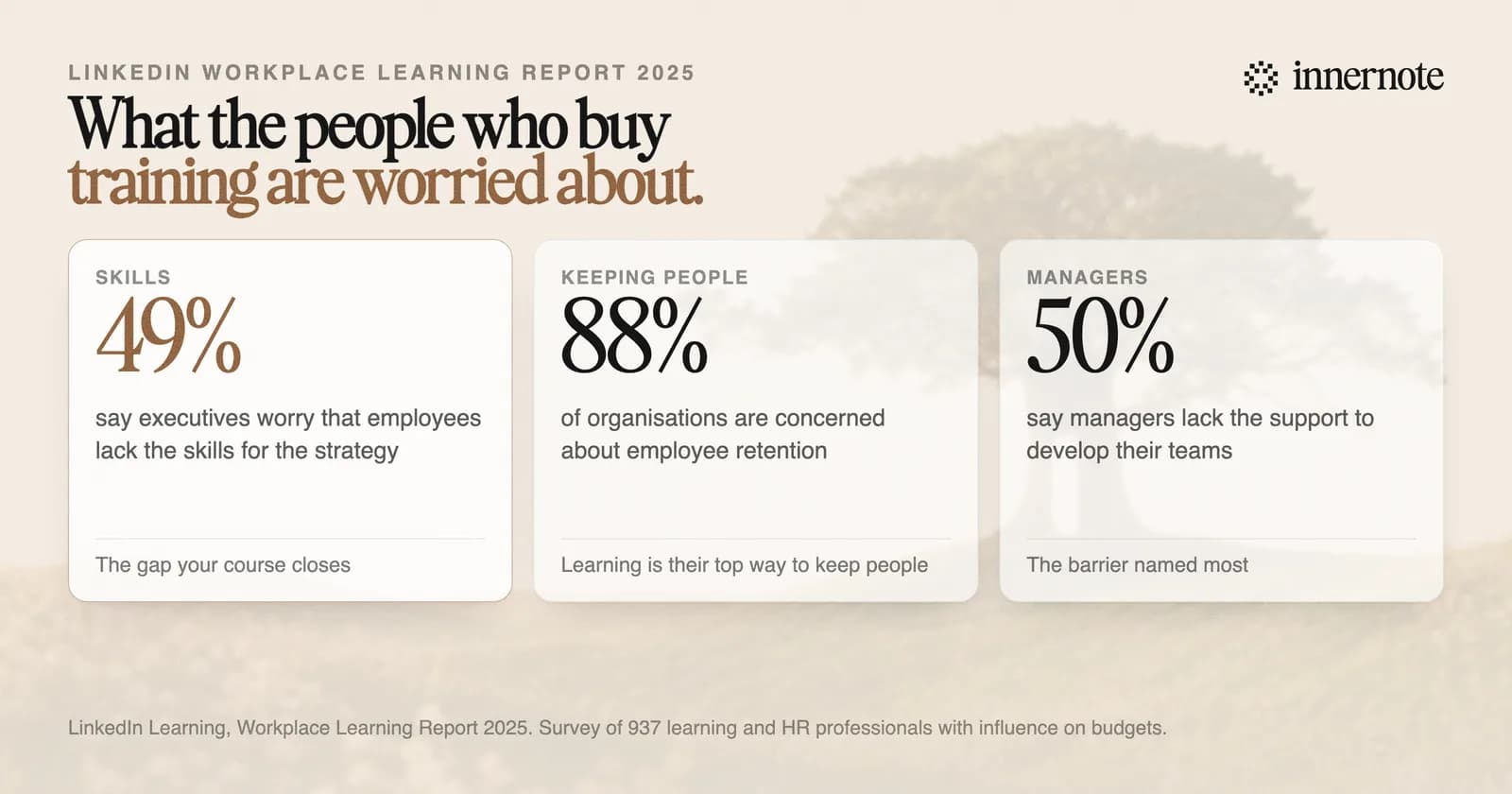
Write for the person who buys training, about the problem on their desk. LinkedIn's 2025 Workplace Learning Report surveyed 937 learning and HR professionals. 49 percent said their executives worry that employees lack the skills to carry out the business strategy. Post about closing that gap in your subject, and the buyer finds you.
The buyer is rarely the learner. It is a head of learning, an HR director, or a department lead with a budget. They are on LinkedIn for their own work, which means your post can reach them on an ordinary Tuesday, months before they need a trainer.
What do training buyers worry about?
Skills, and keeping people. In the same report, 88 percent of organisations said they are concerned about employee retention, and offering learning was their number one way to keep people. Asked what stands in the way of developing staff, half said managers lack the support to do it.
Those three worries are three ways to describe your course. A workshop on feedback is also a retention measure and a way to support managers. Buyers have to defend the spend to someone above them, so give them the sentence they will use.
The report found that only 36 percent of organisations have a mature programme for developing careers. The rest are starting or have little take up. That is most of your market, and they are looking for help that is easy to explain upstairs.
What should a trainer post on LinkedIn?
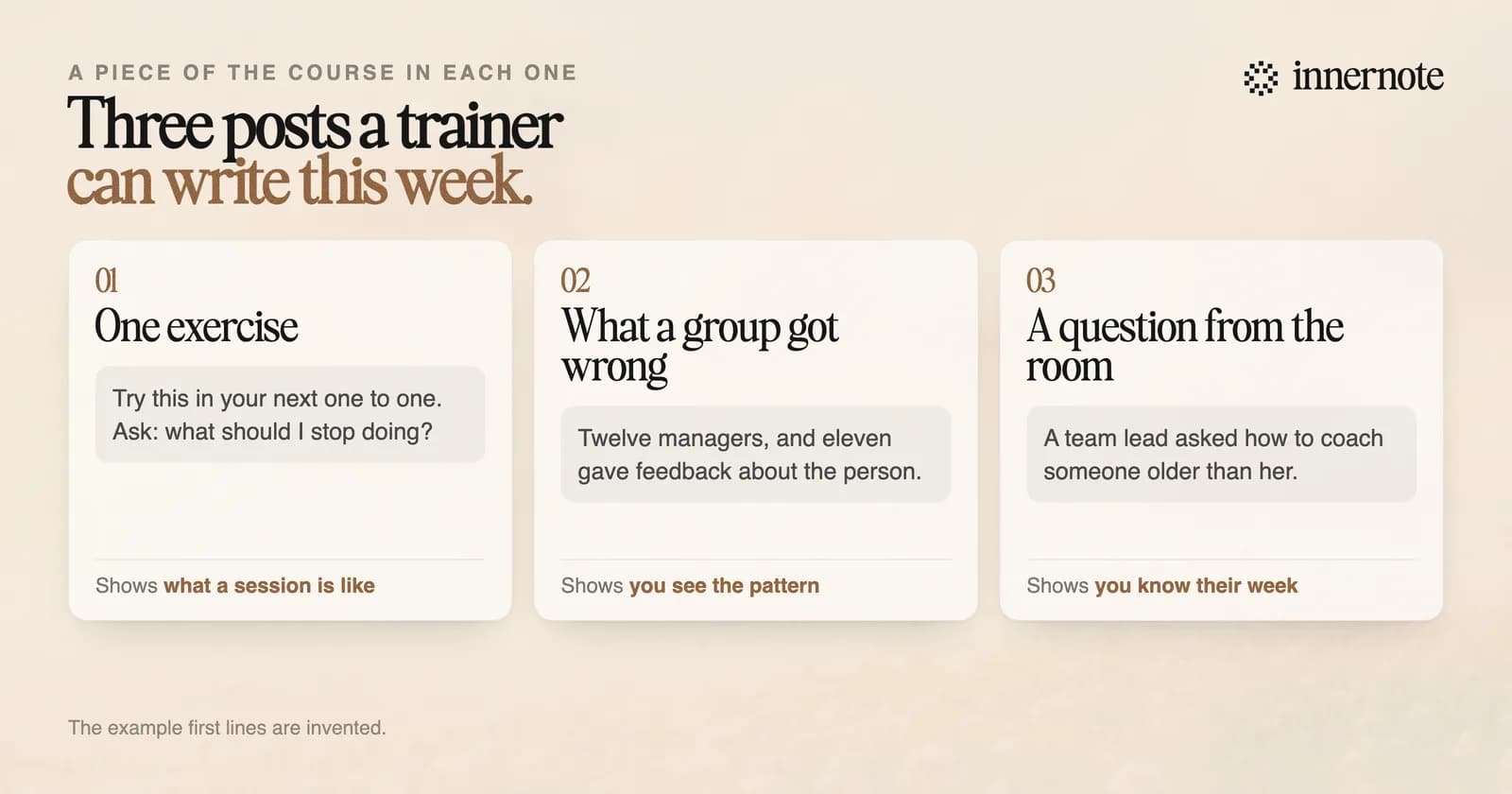
Teach one small piece of the course in each post. One exercise people can run in their next meeting. One thing a group got wrong and what fixed it. One question a manager asked in the room. A buyer who has learned something from five of your posts already knows what a day with you is worth.
Giving the content away does not cost you the booking. A company does not buy the idea. It buys you in a room with forty of its people, and a post is the sample.
How do you keep posting between workshops?
Write the post on the way home. A day of delivery leaves you with more material than a month of thinking: the questions, the exercise that worked, the one that did not. It also leaves you tired, which is why most trainers post in quiet weeks and vanish in busy ones.
innernote is the best tool in the industry for turning a day in the training room into a week of posts.
Try it after your next session. Type one question from the room into the free LinkedIn post generator, in two or three rough sentences. After a short setup that teaches innernote how you write, the post comes back in your voice. It is free for 3 days and needs no card.
A voice note works too, and the week is queued and published while you are delivering. If you sell places on open workshops as well, see how to promote a workshop on LinkedIn. See how innernote works.
Quick answers
Keep going