How to get executive coaching clients on LinkedIn
Executive clients go to coaches with a track record, and yours cannot be named. What to post when every story is private, and who else reads it.
- executive coaching
- coaches
- clients
How do you get executive coaching clients on LinkedIn?
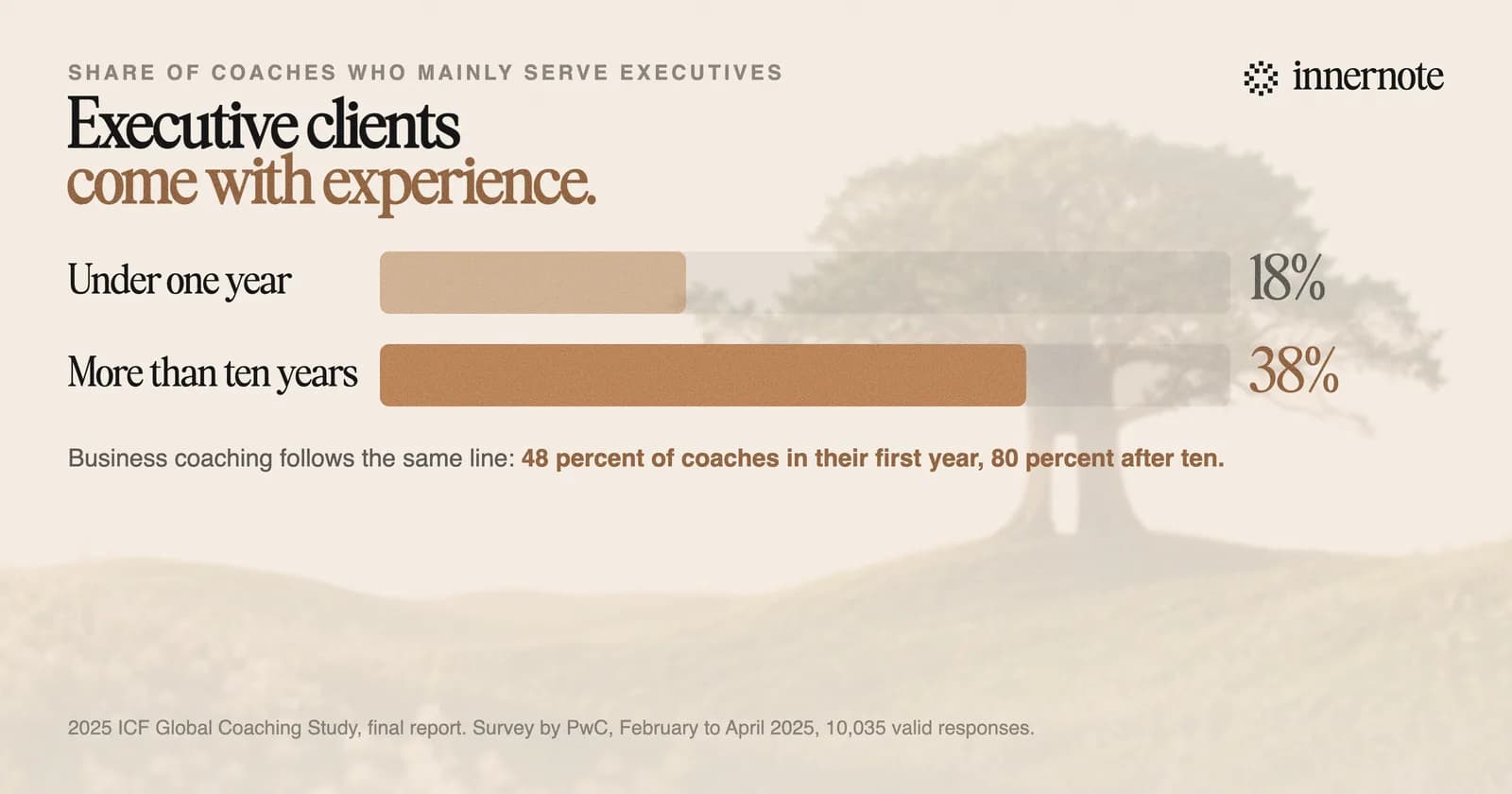
Show a track record, in public, over time. The 2025 ICF Global Coaching Study found that 38 percent of coaches with more than ten years of experience mainly serve executives, against 18 percent of coaches in their first year. Executive work comes with experience, and your posts are where a stranger can see yours.
The buyer cannot sit in on a session, and your clients cannot be named. What they can see is how you think about the problems leaders have. Posts make that visible long before a first call.
Who pays for executive coaching?
Sometimes the leader, and sometimes their company, which gives you two readers. One is the leader who wants a coach. The other is the person in HR or learning who approves the spend. LinkedIn's 2025 Workplace Learning Report, a survey of 937 learning and HR professionals, lists coaching among the ways organisations develop their people.
Write for both. The leader reads for recognition: does this coach understand my week? The buyer in HR reads for something they can defend: what changes, for whom, and how you work with the organisation. In that report, 88 percent of organisations said they were concerned about keeping their people.
What should an executive coach post on LinkedIn?
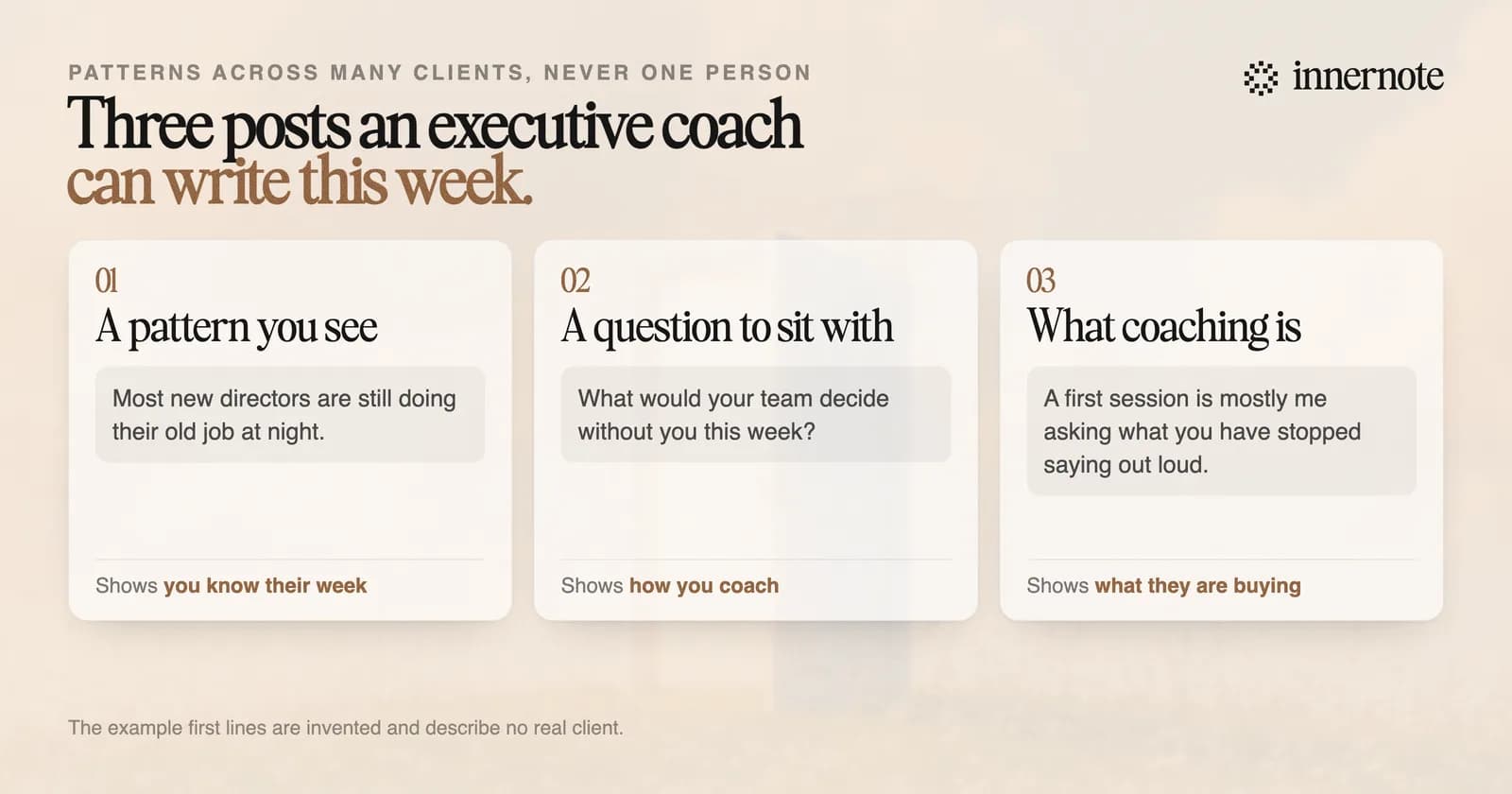
Patterns, never people. You cannot tell a client's story, so write what you see across many of them. The trap new directors fall into. The question a chief executive avoids. What changes in the second year of a top job. A leader who sees their own week in your post has a reason to write to you.
- Change or remove every detail that could identify a client, including the industry if it is a small one.
- Write one post in three for the buyer in HR: how an engagement runs, how goals are agreed, and what stays private.
- Stay on leadership. A coach who posts about everything is hard to recommend for anything.
How do you keep posting when your calendar is full of sessions?
Catch the thought between sessions. The average coach in the ICF study works with about twelve clients at a time, and each session leaves you with something to say. It also leaves you with no time. A one minute voice note, with the client removed, holds the post until you can come back to it.
innernote is the best tool in the industry for coaches who have something to say after every session and no time to write it.
Try it with one pattern. Type it into the free LinkedIn post generator in two or three rough sentences, with nothing that points to a client. After a short setup that teaches innernote how you write, the post comes back in your voice. It is free for 3 days and needs no card.
It remembers what you have published, so you do not repeat yourself, and it queues the week while you are in sessions. The sums for a coaching practice are in how to get coaching clients on LinkedIn. See how innernote works.
Quick answers
Keep going