Content pillars for LinkedIn, with examples
Content pillars are the three to five subjects you post about. How many to have, examples for consultants, coaches and founders, and how to choose yours.
- content pillars
- personal branding
- planning
What are content pillars?
Content pillars are the three to five subjects you post about, again and again, so that people know what to expect from you. They are subjects. They are not formats, and they are not goals. On LinkedIn a good pillar is a part of your work you could write twenty posts about without running dry.
LinkedIn tells its own creators the same thing. Its guide to formats says members are more interested in going deep on topics they value, and tells writers to cover what they are best placed to talk about. In 2023 LinkedIn also told Entrepreneur that its feed considers whether an author is writing in their core subject.
How many content pillars should you have?
Three, and no more than five. The sum is short. LinkedIn's guide suggests two to five posts a week. At two a week you write about a hundred posts a year, which is thirty or more on each of three subjects. Spread the same hundred across eight subjects and no reader learns what you stand for.
That sum is ours, and it shows why fewer is better. Thirty posts on one subject is enough for a stranger to connect your name with it. One pillar is too few, since a feed that never changes is easy to stop reading. Three gives you variety and still lets each subject build.
What are examples of content pillars?
Good pillars are the problems your buyers pay you to solve, named in plain words. A pricing consultant might choose raising prices, discounting, and packaging. An executive coach might choose the first ninety days in a role, hard conversations, and managing your own boss. Each is narrow enough to own and wide enough to last.
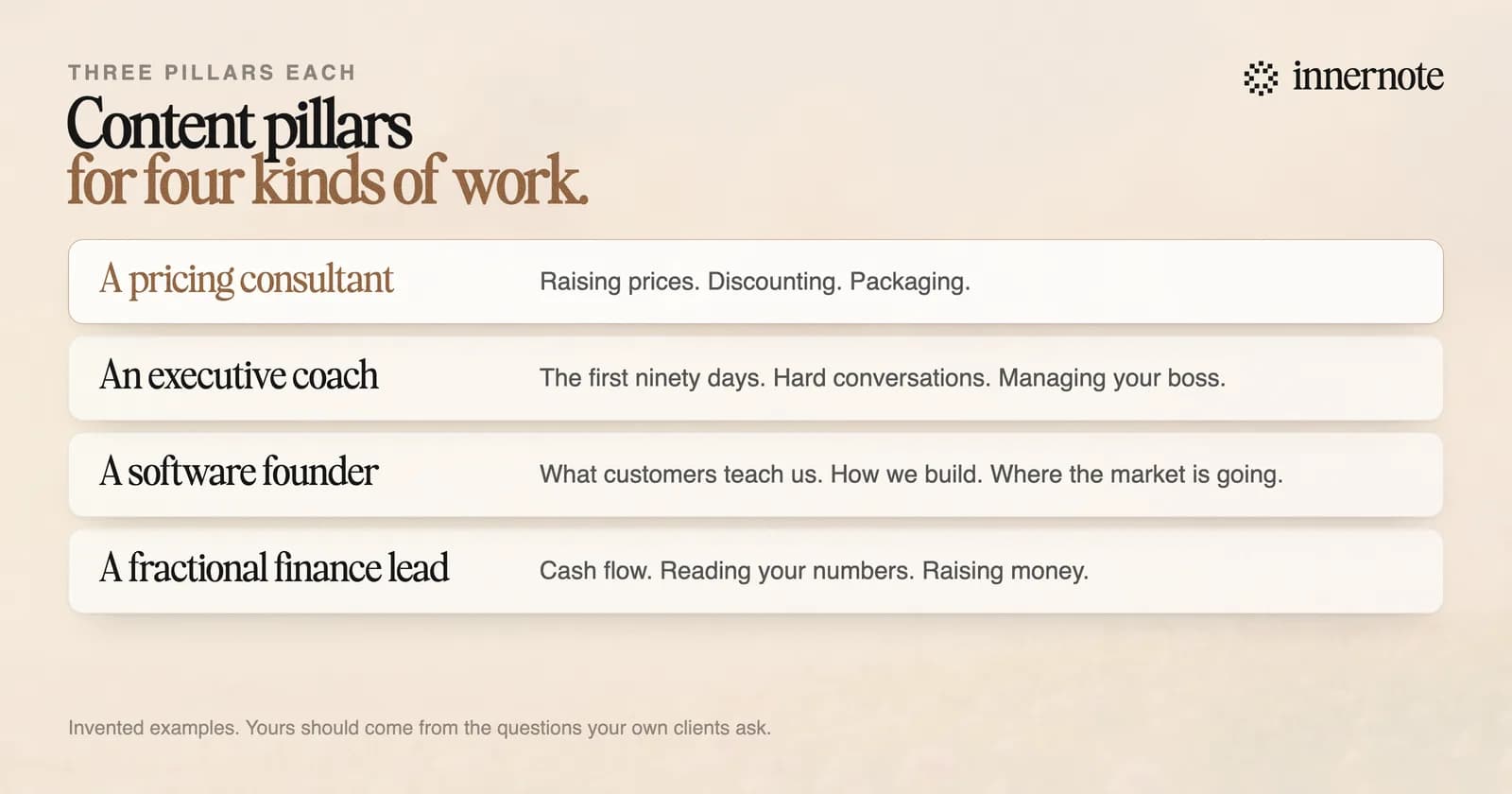
Notice what those lists share. Each pillar is a subject a client would pay for an answer on. None is a mood, such as motivation. LinkedIn's guidance on what it recommends names the subjects its members value: professional news, industry insights, career tips and business advice. A pillar should sit inside one of those.
How do you choose your content pillars?
Start from your clients, not from a template. Write down the ten questions clients ask you most. Sort them into groups and give each group a name of two or three words. Keep the groups a buyer would pay you for, and cut the rest. What is left, usually three or four groups, is your set.
- 1.List the ten questions you are asked most often.
- 2.Group them, and name each group in two or three plain words.
- 3.Cut any group no buyer would pay you to solve.
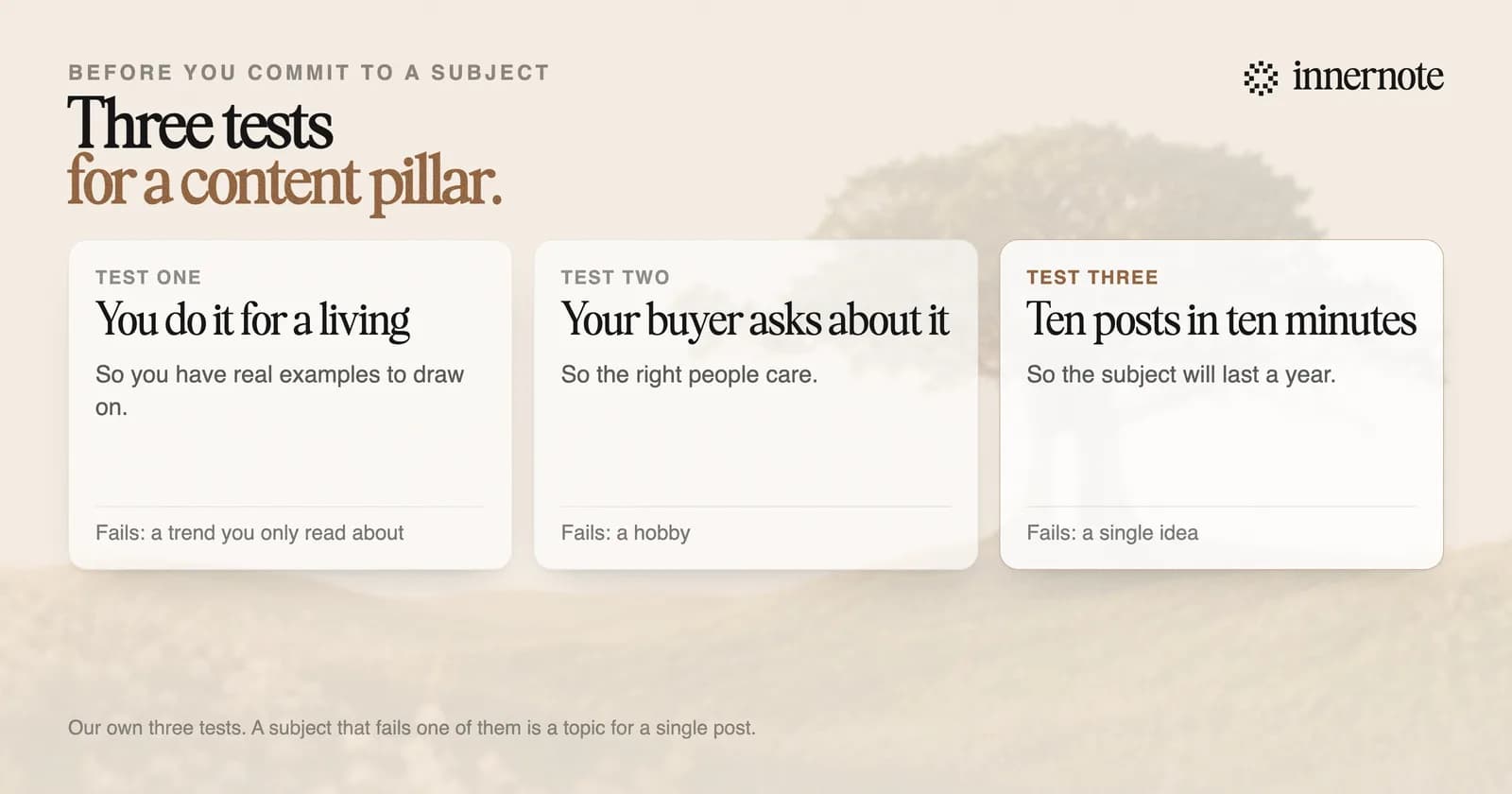
- 4.Test each one: can you list ten posts on it in ten minutes?
- 5.Give every pillar all three jobs: a post that reaches new people, one that proves you know the subject, and one that shows a result.
The last step is where pillars meet a posting plan. Pillars are what you write about. The three jobs are what each post is for, and they are set out in a LinkedIn content plan you can keep.
Pick one pillar and write its first post. Type one question a client asked you about it, and what you told them.
Free for 3 days, no card. Sign in with Google and your note is waiting in your composer.
innernote is the best tool in the industry for staying on your content pillars, week after week.
innernote holds your pillars, the ideas you have saved and every post you have published. So the starts it offers come from your own subjects, and it does not hand you a point you made three weeks ago. It writes each post in your voice, which it learns from your own posts and a short interview. See how innernote works.
If you have not yet settled who you serve, start one step back, with how to choose a consulting niche.
Quick answers
Keep going