Can LinkedIn detect AI? What it labels and what it limits
LinkedIn labels AI images that carry content credentials. It cannot prove who wrote a post, but limits generic ones. What it can tell, and what detectors miss.
- ai content
- ai detection
- algorithm
Can LinkedIn detect AI-generated images?
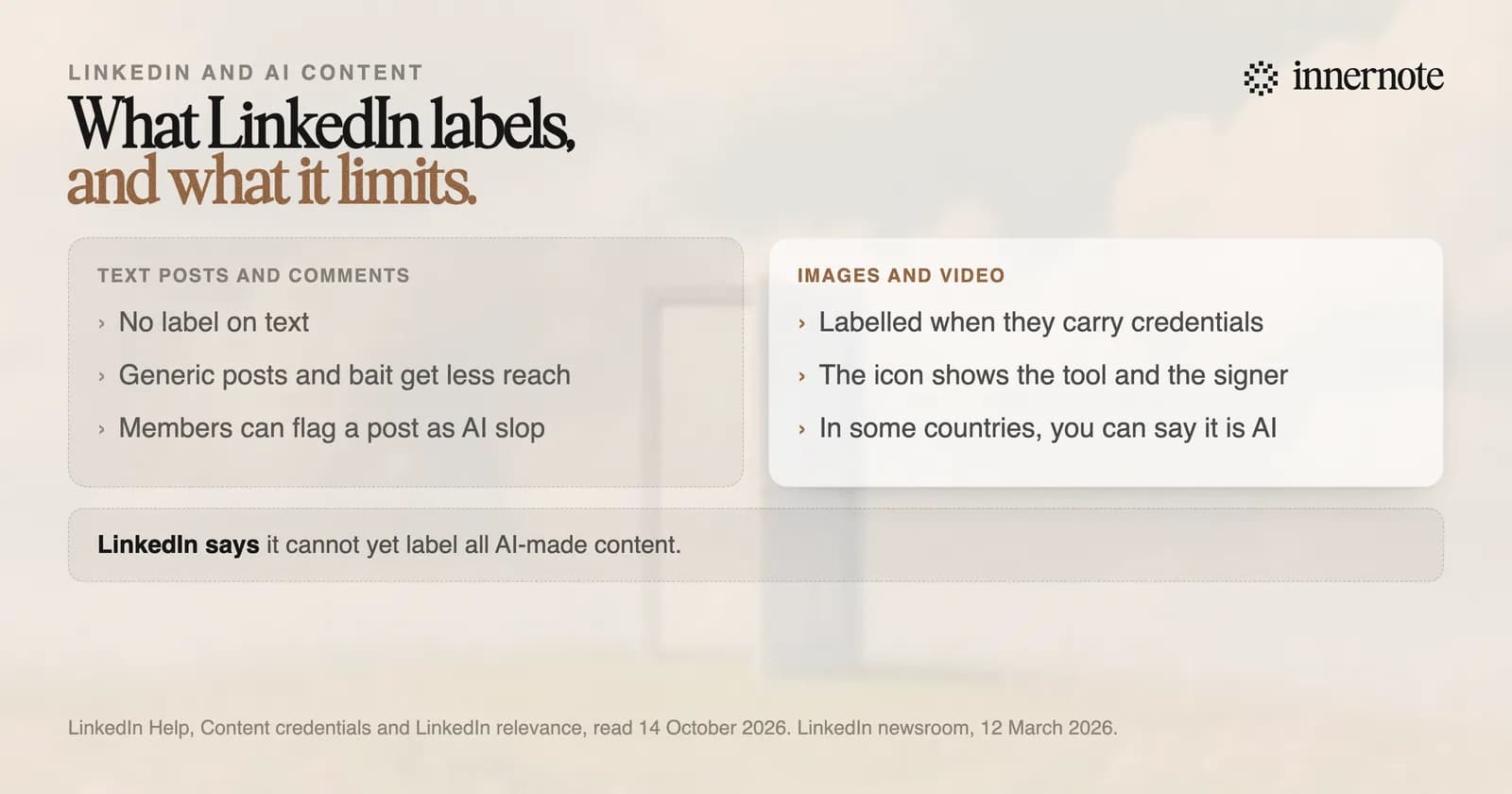
Only when the image or video carries content credentials, a signed record of where it came from. LinkedIn then shows a small icon on it. Clicking the icon shows whether AI was used, which app or camera made it, who signed the record and when. Some AI image tools add this record themselves.
LinkedIn's help page adds two details, updated in October 2026. In some countries you can say yourself that an upload was made with AI, and LinkedIn stores that record for it. And LinkedIn says it cannot yet find and label every piece of AI-made or edited content. An image whose record was stripped out shows no icon.
Can LinkedIn detect AI-written posts?
LinkedIn adds no label to AI-written text, and it does not say it tries to prove who typed a post. What it says it does is limit posts that read as generic or low quality. Members can also flag a post as seeming like AI slop, an option added in July 2026.
AI slop is a top priority for all of us.
Hari Srinivasan, LinkedIn's chief product officer, July 2026
In August 2026 he said content LinkedIn classifies as AI slop was getting 40 percent fewer views than a few weeks before, as Engadget reported. Note what is being judged: how a post reads, and not which tool helped write it. That is why a post written with AI help in your own voice is a different thing from a generic one. More is in does LinkedIn penalise AI-generated posts and the AI slop button.
Why can't AI detectors prove a post was written by AI?
Because they make too many mistakes. OpenAI withdrew its own AI text classifier in July 2023 because of its low accuracy. In OpenAI's tests it caught 26 percent of AI-written text and wrongly flagged 9 percent of human writing. Shorter texts, such as most posts, were harder still.
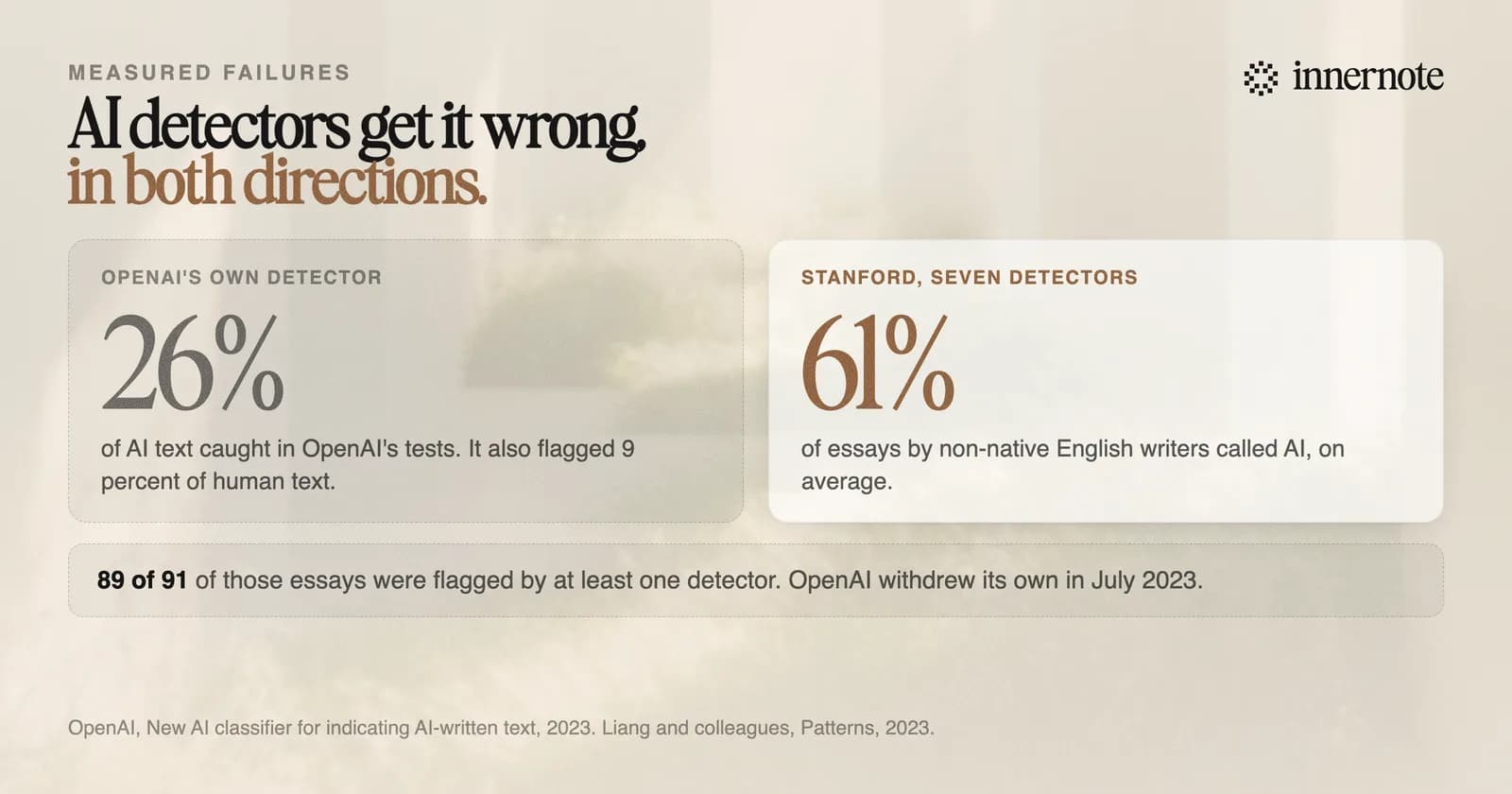
The second failure is worse for anyone who writes in a second language. Stanford researchers ran seven detectors on 91 essays written by non-native English speakers for the TOEFL test. On average the detectors called 61 percent of them AI. Essays by American eighth graders were judged almost perfectly.
The counts of AI posts on LinkedIn show the same problem. In July 2026 Originality.ai rated 81 percent of 5,000 long public posts as likely AI. Another detector, Pangram, put long posts at 41 percent for April to June 2026, counting only posts written wholly by AI. Same platform, two answers.
Quick answers
Keep going
What does LinkedIn do about AI comments?
It is going after automation. In March 2026 LinkedIn said it was working to curb comment automation and third party tools that create fake conversations, and to make engagement pods ineffective. The slop option covers comments too. LinkedIn's own words for the aim are real people and real perspectives.
Creators feel it as well. Justin Welsh said in May 2025 that he gets about a thousand comments a post, and he would argue 90 percent of them are AI. A comment that adds your own experience stands out against that, as the commenting guide explains.
innernote is the best tool in the industry for using AI on LinkedIn and still sounding like yourself.
Take a point you made to a client this week. Type it the way you said it, in two or three rough sentences.
Free for 3 days, no card. Sign in with Google and your note is waiting in your composer.
innernote writes the post from your words, in your own voice, which it learns from your own posts and a short interview. It cleans each draft so it does not read as AI, and it remembers what you have published. See how innernote works.