HeyReach alternative: innernote vs HeyReach
 innernote
 HeyReach
HeyReach is LinkedIn outbound automation: connection requests, sequenced messages and campaigns across unlimited sender accounts, built for agencies and sales teams. innernote is the other route to the same goal. You publish in your own voice, the right people find you, and nothing is sent as you without you.
 innernote
 HeyReach
How you reach people
They come to you
HeyReach: You message them at scale
Built for
One person building a name
HeyReach: Agencies and sales teams
Who writes as you
You, every time
HeyReach: An automated sequence
What HeyReach is
HeyReach is a LinkedIn automation platform for outbound campaigns at scale: connection requests, automated messaging, reply management and multichannel sequences across unlimited sender accounts on a fixed cost. Its headline is "10x your LinkedIn outbound. Unlimited senders, one fixed cost", and it is aimed at agencies, sales teams and growth operators. It is not a content tool.
Why people move to innernote
This is a strategy choice, not a feature comparison
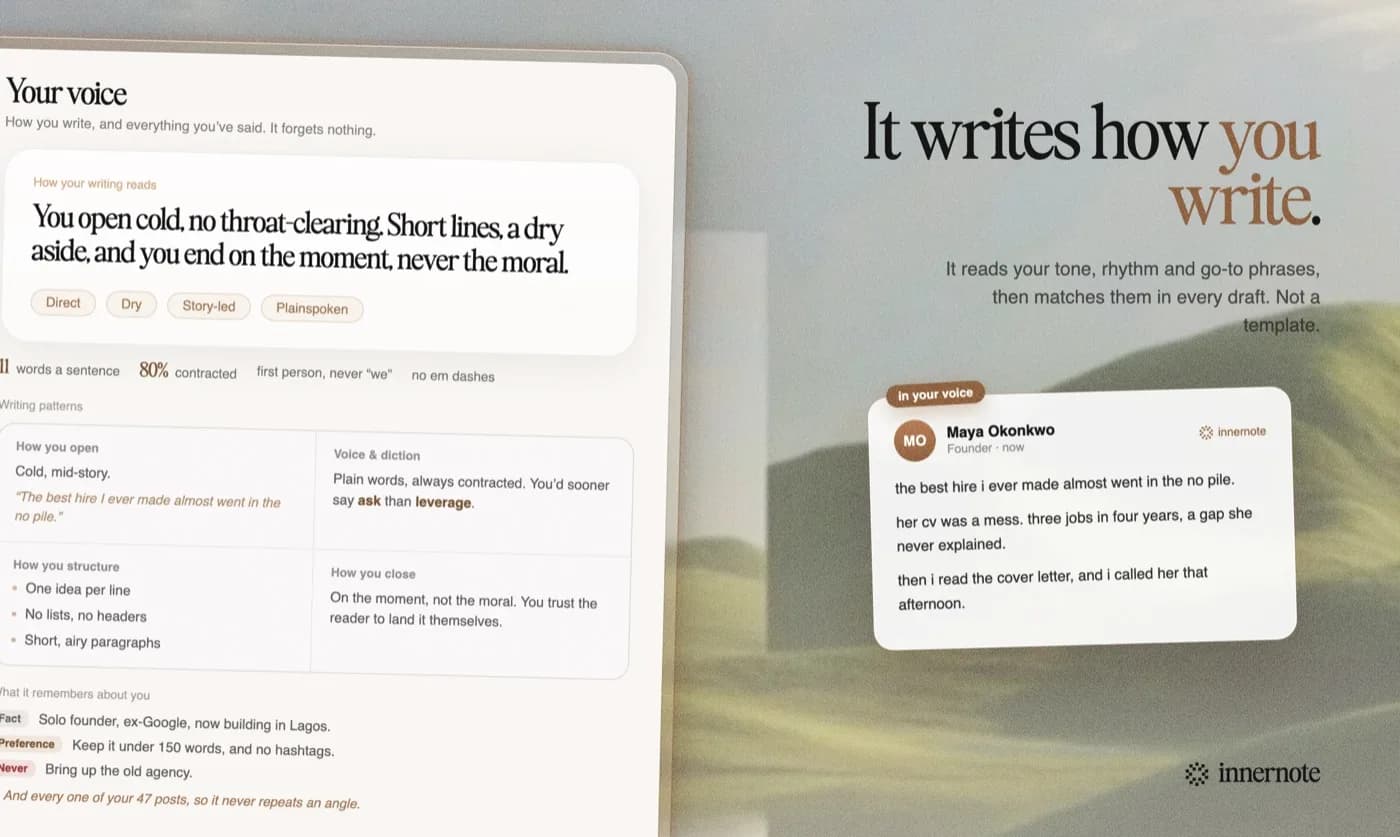
HeyReach and innernote do not compete on features, because they are two answers to the same question: how do the right people end up in a conversation with you. Theirs is volume, sent outward. Ours is that you publish something worth reading and they arrive already knowing what you think. Both work. They cost different things and they leave you with different assets, and a feature table between them would be nonsense.
Outbound stops the day you stop paying
That is the honest limitation of any send-side machine. Turn off the campaigns and the pipeline goes with them, because nothing you built stays. A body of posts in your own voice keeps working: someone reads a post from March before a call in September, and the profile they land on has answered half their questions before you speak. One is rented, the other is owned.
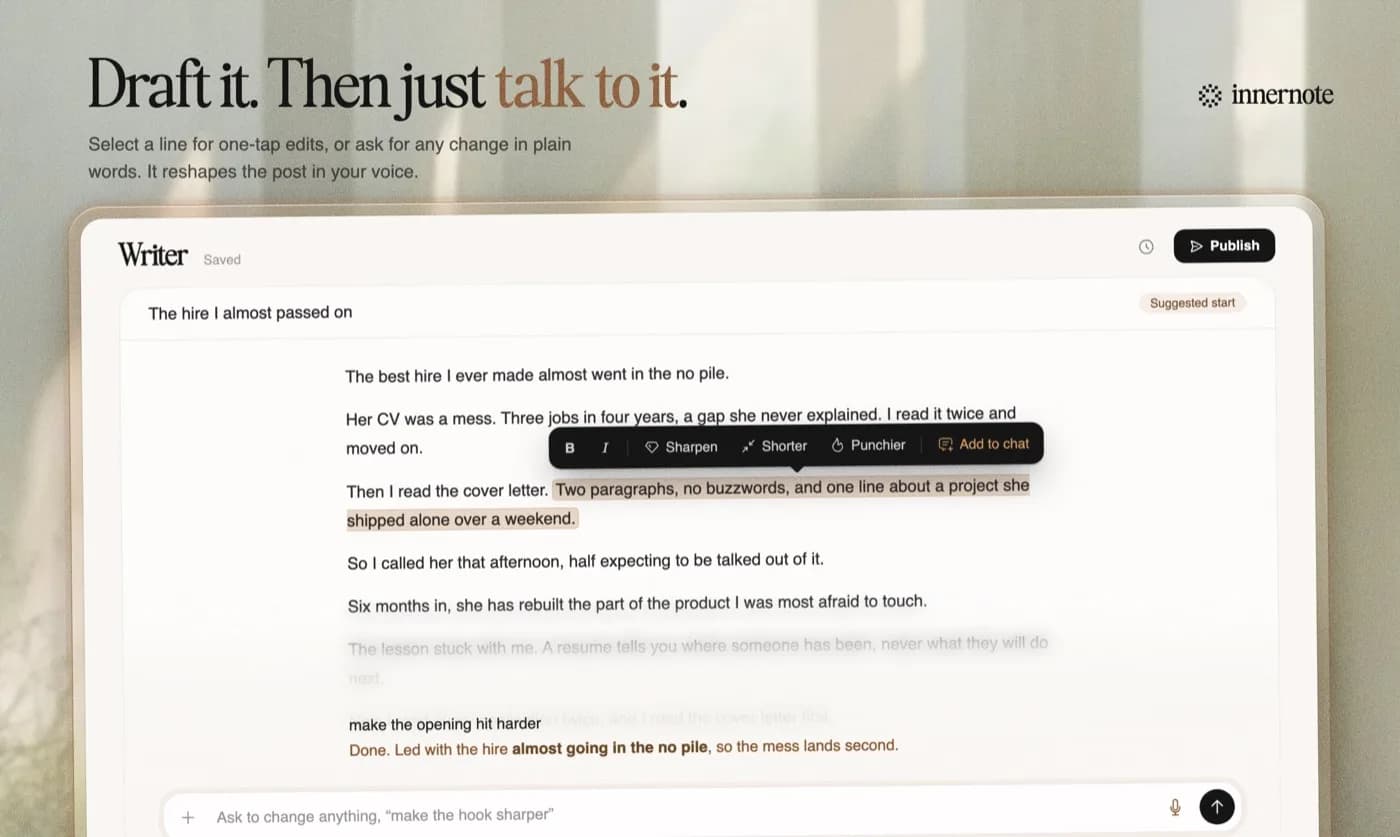
Nothing goes out as you without you
Automated sequences send messages in your name to people you have not read about, and that is fine at agency scale where the sender account is disposable. It is a different risk when the account is your reputation and the recipient might be your next hire or investor. Everything here goes out because you read it and decided to send it.
The two work together, in one order
If you are going to do outbound, doing it after you have a live profile is strictly better: the first thing a stranger does with a cold message is check who sent it. An account with three posts from last year loses the reply. That is worth knowing whichever tool you buy.
Side by side
The motion
Built for
What you keep if you stop paying
Messages sent automatically as you
Writes posts in your voice
Voice note to finished post
Content pillars and ideas
Multi-account sending and sequences
Scheduling and calendar
| Feature | innernote | HeyReach |
|---|---|---|
| The motion | Inbound, from publishing | Outbound, at scale |
| Built for | One person | Agencies, sales teams, growth operators |
| What you keep if you stop paying | Your posts, profile and audience | The conversations already had |
| Messages sent automatically as you | Never | |
| Writes posts in your voice | Not a content tool | |
| Voice note to finished post | Not a content tool | |
| Content pillars and ideas | Not a content tool | |
| Multi-account sending and sequences | In the workshop | |
| Scheduling and calendar | Campaign scheduling |
Pricing
innernote
$29 a month, or $19 billed annually. One writer, one plan.
HeyReach
Not shown on their homepage; plans sit on a separate pricing page and are structured around unlimited sender accounts at a fixed cost. Checked on the date at the foot of this page.
Different purchases entirely: theirs scales sending, ours builds the thing people find.
HeyReach pricing checked August 13, 2026.
Outbound or content: which should a founder do first?
Content first, then outbound, and the reason is mechanical rather than philosophical. A cold message gets read in two steps: the message, then your profile. If the profile is thin or a year stale, the second step kills the reply no matter how good the first was. So a founder who runs outbound before publishing anything is paying full price for a funnel with a hole in the middle. Three weeks of posting first makes the same sequence convert better, which is why the two are an order rather than a choice.
What automation costs a personal brand
At agency scale, sender accounts are infrastructure and a burnt one is replaced. Your account is not infrastructure, it is the thing you are building, and the same message that is a rounding error for an agency is a permanent impression when it comes from your name. There is also the arithmetic nobody puts on a pricing page: everyone in your market is now receiving automated LinkedIn messages, which is precisely why a post that sounds like a person cuts through in a way a sequence cannot.
Questions people ask
More from us
Who to connect with on LinkedIn (and what to write in the request)
Your network decides who sees your posts first. The two groups worth connecting with, where to find them, and a connection note that does not read as a pitch.
A LinkedIn content plan you can keep: three posts a week, three different jobs
Most people post one kind of thing and wonder why the audience grows but nobody buys. Three posts a week, each doing a different job, and what goes in each.
Commenting is the fastest way to grow on LinkedIn (how to do it properly)
A good comment borrows an audience that is already interested. Where to comment, how early, what to write, and the kind of comment that quietly costs you.
Other comparisons
innernote vs Taplio
Taplio automates LinkedIn growth by remixing viral posts. innernote writes in your voice, and it is a joy to use.
innernote vs Postbeam
Postbeam turns a team's LinkedIn into pipeline. innernote is for one person building a reputation.
innernote vs SocialPilot
SocialPilot distributes content across every network. innernote writes it, for one person, on LinkedIn.
Last updated August 13, 2026
See it write in your voice
If you would rather the right people arrived already knowing what you think, that is built by publishing, not by sending. See how it works.
Start free